New York Hakka Conference

12038109_10206866982065686_8953866209858775553_nIt’s almost time for the first New York Hakka Conference. The event starts Friday, October 16 with a  reception at Museum of Chinese in America (MOCA) featuring The Nation Music of Jamaica’s Byron Lee. A weekend of films, panel discussions, and talks–all focused on the Hakka follows at the Cantor Film Center at NYU. Come and learn about the “guest people”, their history, identity, diaspora, and food.

Click here to register. Special $50 rate for students. Day passes available for $88. Check the schedule of events.

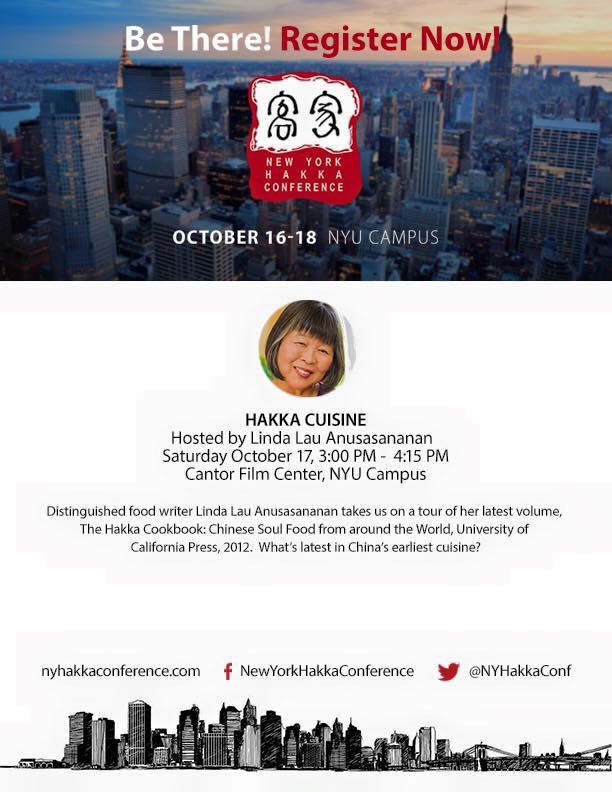
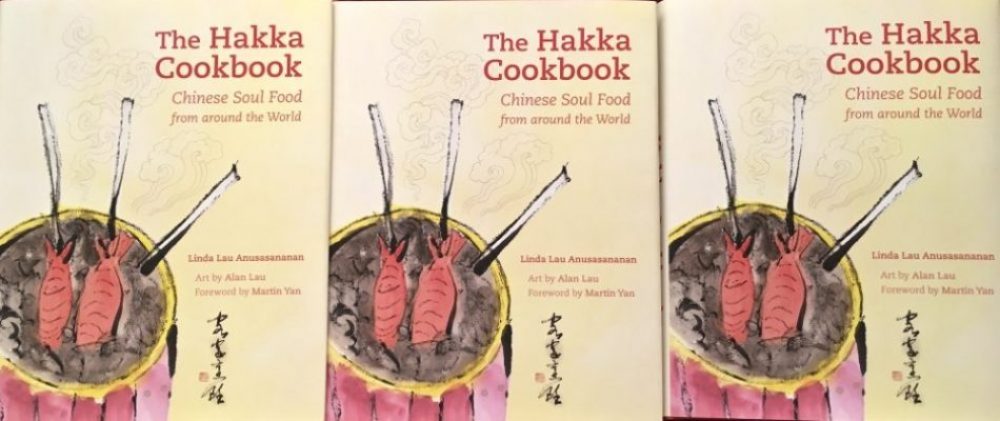
On Saturday, October 17, I will talk about Hakka cuisine and show some slides of food and people I encountered on my global trip. If you have a copy of The Hakka Cookbook and would like me to sign it, please bring it. I am not bringing a suitcase full of books to sell.

You can order or buy The Hakka Cookbook at a couple of local stores: NYU Bookstore, 726 Broadway, NY, NY,  212. 998. 4678 or Kitchen Arts and Letters, 1435 Lexington Ave., NY, NY, 212. 876. 5550.

Hope to see you soon.

New York Hakka Conference schedule

nyc Hakka I am putting together a slide show for The New York Hakka Conference. My subject is Hakka Cuisine so I plan to show photos of Hakka food and share stories I encountered on my global journey to research The Hakka Cookbook. Register for the conference and learn more about Hakka history, identity, and food. Following is a tentative schedule of events:

FRIDAY, OCTOBER 16, 2015

Museum of Chinese in America (MOCA) at 215 Centre Street, New York, NY 10013

RECEPTION at the Museum of Chinese in America (MOCA). 7:00 PM Feature presentation – The Nation Music of Jamaica’s Byron Lee. Starting a calypso and mento group in high school, Byron founded the Dragonaires as a big dance band that held sway over four decades in Jamaica and the Caribbean, as well as in  the diaspora cities of London, Miami, New York, and Toronto. From ska to rock-steady to reggae and soca, mambo and cha-cha-cha, Byron reproduced the international signature music of the Caribbean.


SATURDAY, OCTOBER 17, 2015 NYU Cantor Film Center at 36 East 8th Street, New York, NY 10003

9:00AM OPENING CEREMONY (Room 200)
9:15 – 10:30AM THE SEARCH for MY CHINESE FAMILY –  Paula Williams Madison screens her documentary and reads from her book, “Finding Samuel Lowe: From Harlem to China” (Room 200)
10:30 – 10:45AM BREAK
10:45 – 11:30AM CHINESE NAMES, HAKKA GENERATIONS – Dr. Keith Lowe, co-founder of the Toronto Hakka Conference, uses the Lowe family to illustrate the clan system that is the backbone of Chinese civilization. (Room 101)
10:45 – 11:30AM RESTORING THE CHINESE CEMETERY – Robert Hew and Robert Lee, leading members of the cemetery team of the Chinese Benevolent Society of Jamaica, describe the restoration of the cemetery that was unused for three decades.  Records have been translated and carried over to a database which reveals the location of one’s ancestors. (Room 102)
11:30AM – 12:30PM AFRO-CHINESE RELIGIOUS PRACTICES in CUBA – Dr. Martin Tsang, Florida International University (Room 101)
12:30 – 1:30PM LUNCH (Non-hosted) Please enjoy the wide selection of local restaurants.
1:30 – 2:45PM CHINESE SUCCESS AS SHOPKEEPERS, BAKERS, ENTREPRENEURS, Part 1 –  Alexandra Lee moderates a panel consisting of business leaders Vincent HoSang, Vincent J. Chang, Butch Hendrickson, and Dalton Yap. (Room 102)
1:30 – 2:45PM REVOLUTIONARIES AND CHANGE MAKERS – Prof. Richard Bohr, Dr. Samuel Lowe (Room 101)
2:45PM – 3:00PM BREAK
3:00 – 4:00PM CHINESE SUCCESS AS SHOPKEEPERS, BAKERS, ENTREPRENEURS, Part 2 – Alexandra Lee moderates a panel consisting of business leaders Vincent HoSang, Vincent J. Chang, Butch Hendrickson, and Dalton Yap. (Room 102)
3:00 – 4:00PM HAKKA CUISINE – Linda Lau Anusasananan, author of The Hakka Cookbook: Chinese Soul Food from Around the World (Room 101)


SUNDAY, OCTOBER 18, 2015

NYU Cantor Film Center at 36 East 8th Street, New York, NY 10003

9:30 – 10:30AM HAKKA EARTH BUILDINGS AS WORLD HERITAGE – Ruifeng Liang, Professor of Engineering, Western Virginia University (Room 101)
9:30 – 10:30AM HAKKA MIGRATIONS – Patrick Lee, author of Chinese Canadian Jamaicans & Chinese Jamaicans Worldwide (Room 102)
10:30 – 10:45AM BREAK
10:45AM – 12:00PM MASTERING CARIBBEAN MUSIC and ART, Part 1 – Panel Discussion: Broadcaster Francine Chin, VP Records President Randy Chin, and author Kevin O’Brien Chang (Room 101)
10:45 – 12:00PM MIXED RACE PERSONS Screening of documentary, “Half,” produced and directed by Jeanette Kong (Room 102)
12:00 – 1:00PM LUNCH (Non-hosted) Please enjoy a the wide selection of local restaurants.
1:00 – 2:30PM MASTERING CARIBBEAN MUSIC and ART, Part 2 – Panel Discussion: Broadcaster Francine Chin, VP Records President Randy Chin, and author Kevin O’Brien Chang (Room 101)
1:00 – 2:30PM CARIBBEAN CHINESE LITERATURE and ART – Easton Lee reads poems and stories from his many books based on a lifetime spent developing Jamaican culture from the village square to the international stage. (Room 102)
2:30 – 2:45PM BREAK
3:00 – 4:15PM WRAP UP & CLOSING CEREMONY in Room 200


New York Hakka Conference

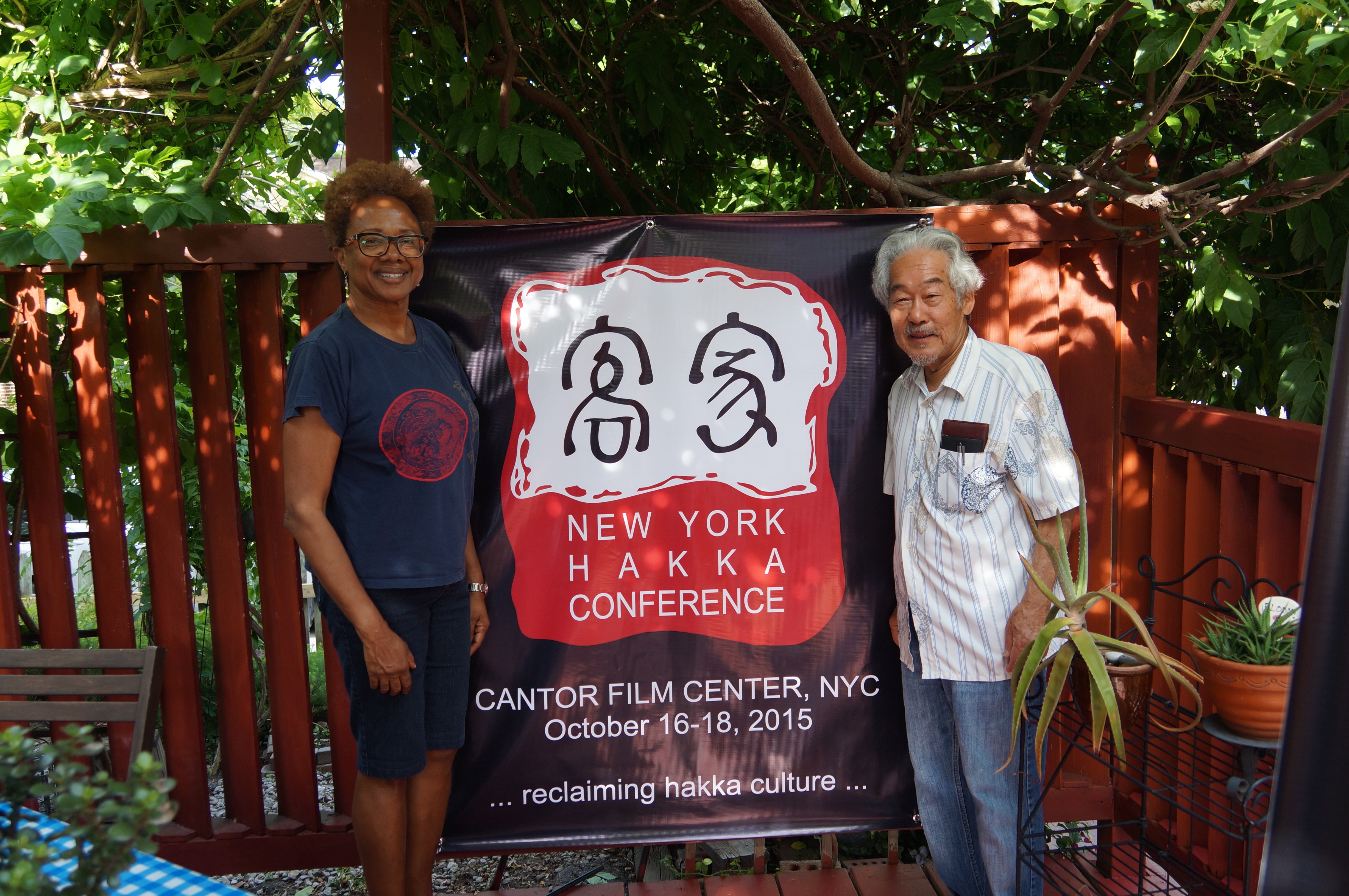
nyc Hakka“Reclaiming our Hakka Heritage” is the theme of the first New York Hakka Conference. This conference aims to educate people of Hakka and Hakka-Chinese descent in retaining and adapting their traditional culture. Any interested person can attend. The conference starts Friday night October 16 and ends Sunday October 18, 2015.

A festive Friday evening reception at the Museum of Chinese in America kicks off the conference with The Nation Music of Jamaica’s Bryon Lee.

On Saturday and Sunday film screenings, panel discussions, and presentations will be held at the Cantor Film Center at New York University. View the documentary film, “Finding Samuel Lowe: China, Jamaica, Harlem. Learn about Hakka earth buildings, Hakka Migrations, Chinese names and Hakka generations, Chinese success as shopkeepers and entrepreneurs, and much more.

I will be sharing a slide presentation on Hakka cuisine on Saturday afternoon. Register NY Hakka Conference now and join me for a weekend of discovery.

The second Hakka cooking party

A couple of years ago, my high school friend Karen suggested we organize a cooking party around The Hakka Cookbook. We had such a good time she wanted to repeat it again. I suggested we try different recipes this time.

I planned a menu with six recipes trying to choose ones that would not suffer when cooked in a larger quantity. I suggested each cook claim one recipe and bring it to the party ready-to-eat or completely prepped and ready to cook. In this organized potluck, the work and expenses are shared which makes it much less stressful for the host.

We numbered thirteen. The men opted out of the cooking and were happy to drink beer and socialize outside. The six women, longtime childhood friends, gathered in the kitchen to catch up, laugh, and get the meal on the table. Since we served two dishes at a time, usually only two people were at the stove, while others watched and learned.

Our crew cooked and ate the meal at a leisurely pace in three courses, serving two dishes at a time, buffet style. We spent the whole afternoon cooking, talking, and eating. It’s an easy party plan to duplicate for your own Hakka cooking party. This party also pushes you to explore the cookbook more deeply. Enjoy—cook, learn, and eat!

First courses:

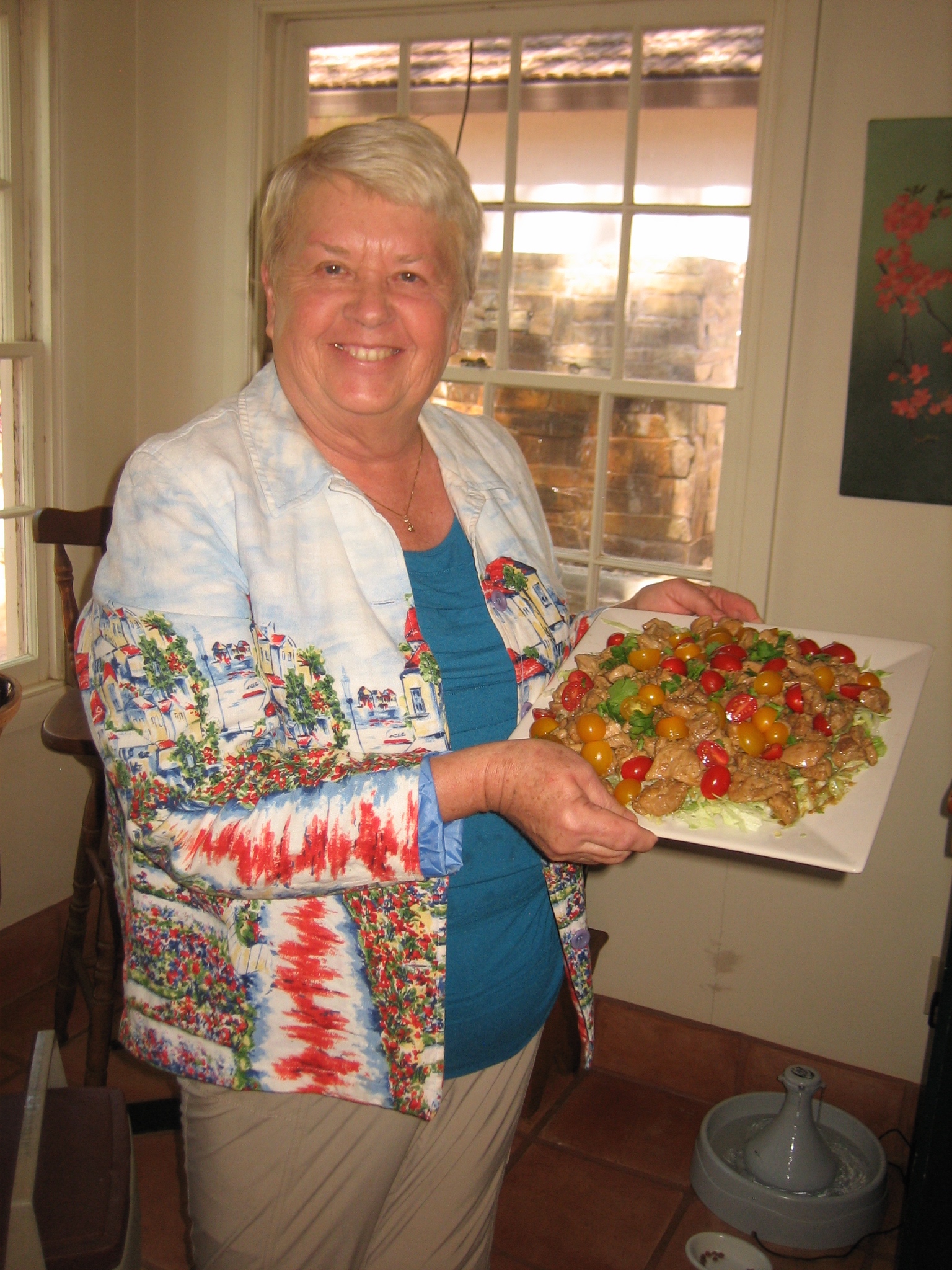
Ruby and Chicken MorselsSoy Glazed Chicken Morsels (p. 199). Ruby doubled the recipe, cooking it in two batches at home, shortly before the party. She served the chicken at room temperature over a bed of lettuce. The chicken can also be served hot.

Mustard Green and Pork Soup (p. 26) Nancy brought a double batch of the broth with the pork. Shortly before serving, she reheated the broth and added the cut-up mustard greens.

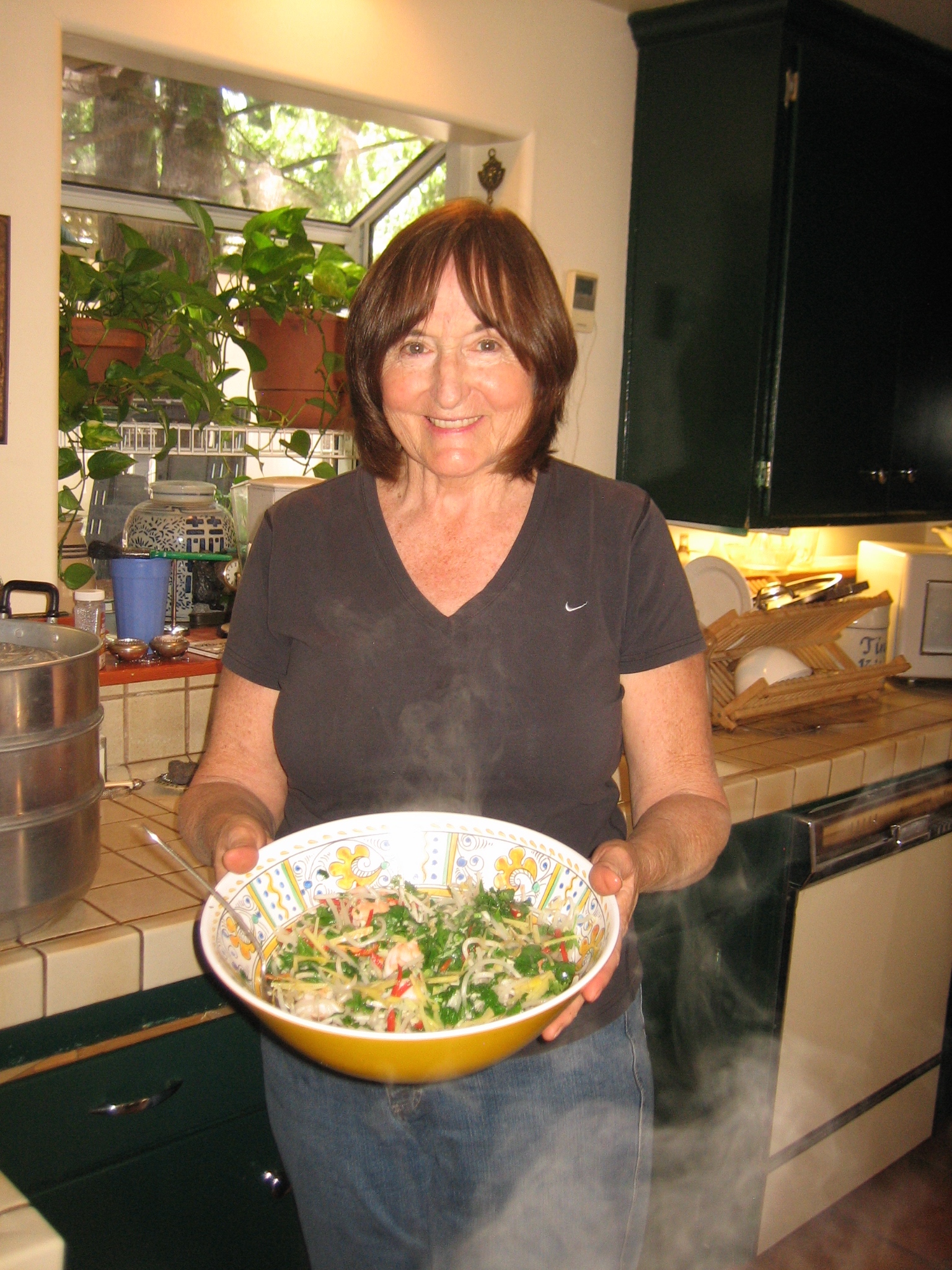
Second courses:Phyllis and Shrimp

Poached Shrimp and Ginger Broth (p. 103) Phyllis brought a double portion of shrimp and seasonings. Once the water boiled, it only took minutes to cook the shrimp.

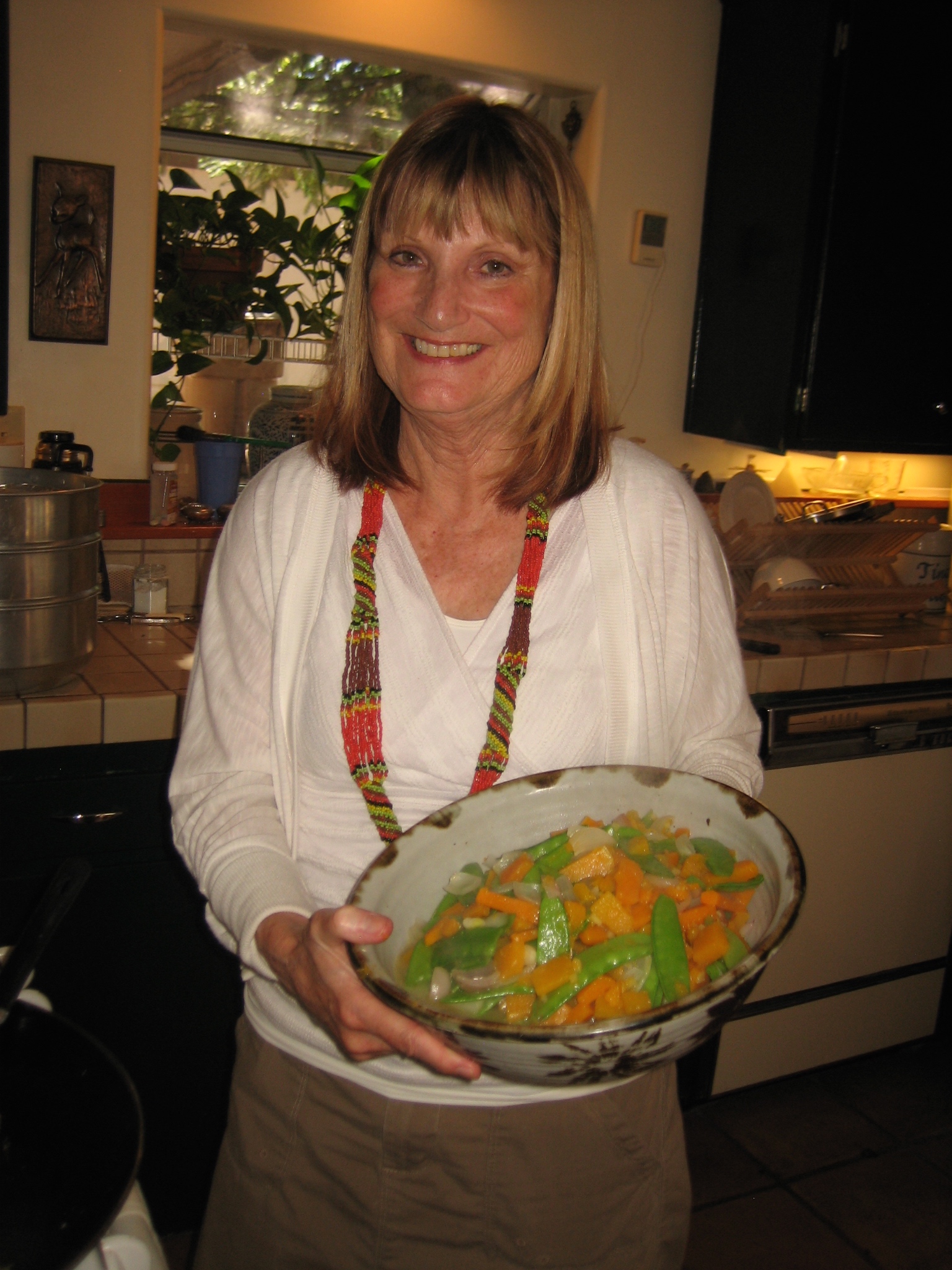
Barbara with Squash and Peas


Ginger Scented Squash and Peas (p. 52) Barbara pan-steamed a double portion of this colorful vegetable medley in my 14-inch wok. She used shallots instead of lily bulbs.

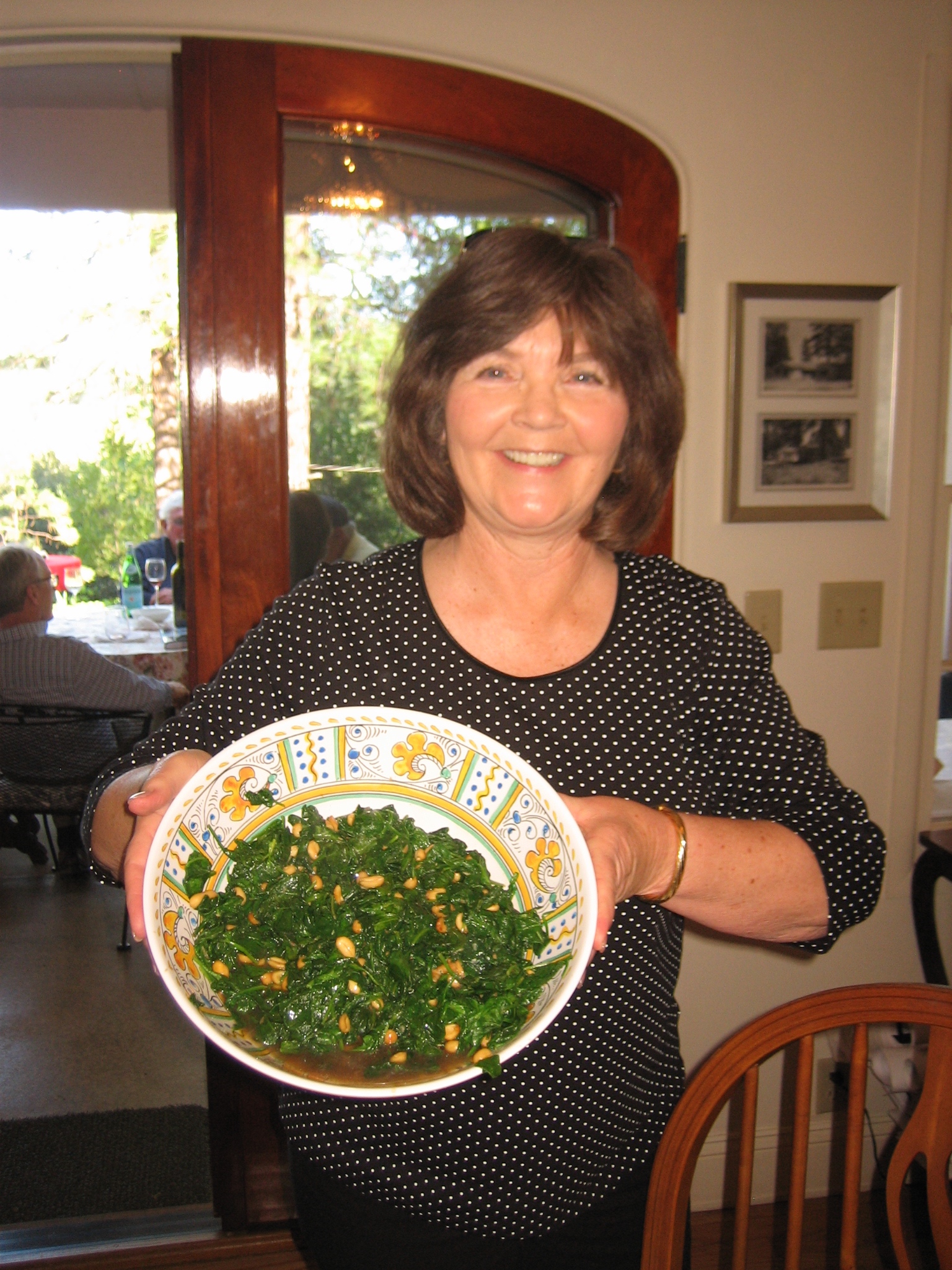
Third courses:Melanee and Spinach

Steamed Black Bean Pork (p. 165) The day before I cooked a double batch of this recipe and chilled it overnight. The next day, I reheated the two bowls in my stacked steamer.

Spinach and Peanuts (p. 56) Mel stir-fried two double batches of spinach just before serving.

Hot Rice

Potluck Desserts

Wine, Beer, Hot Tea, and  Sparkling Wine and Water


Hakka steamed pork and eggs

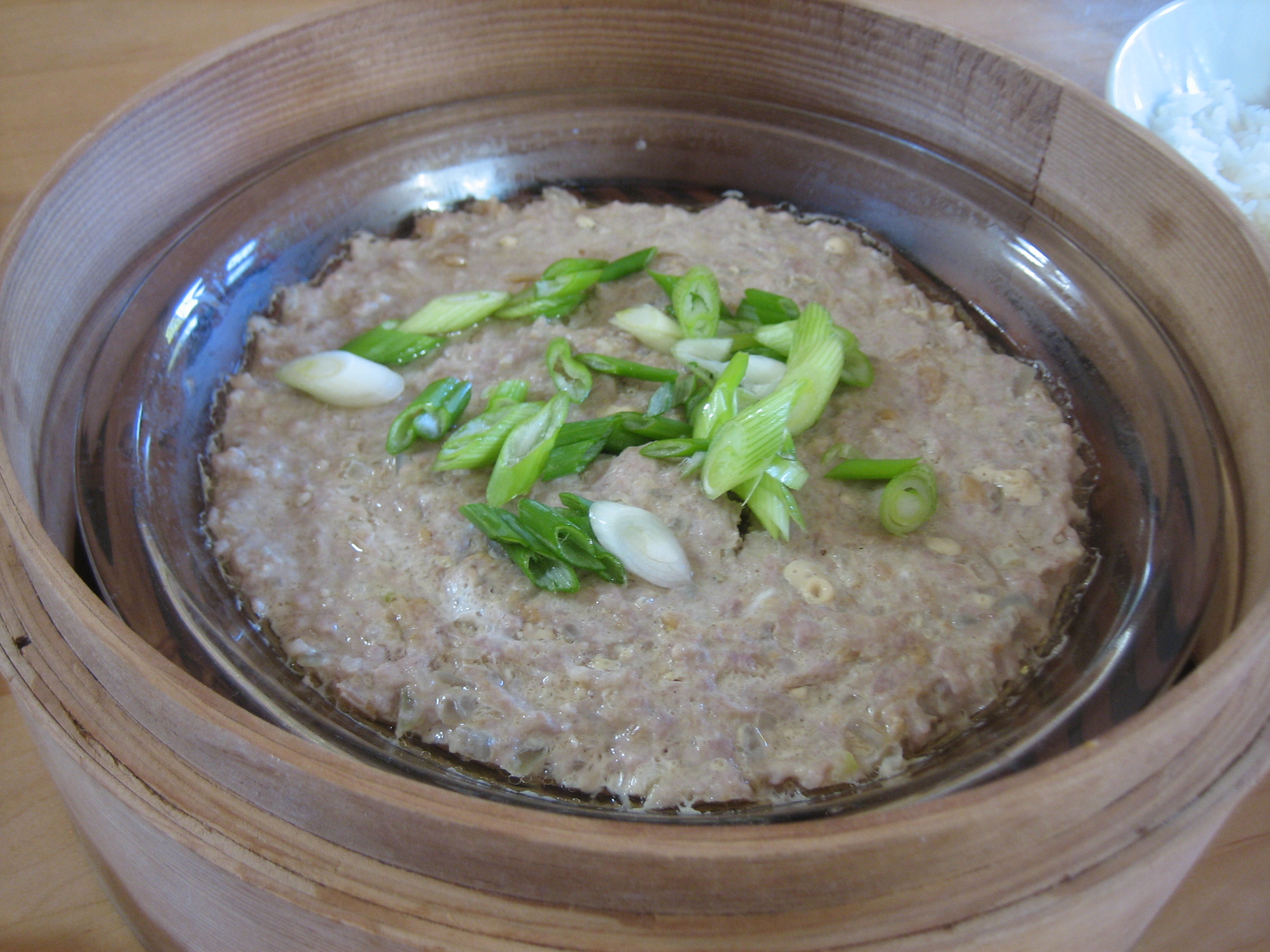
Steamed Pork and EggLast month I wrote about Hakka dishes for Chinese New Year.  I had asked a Hakka Facebook group what were some of their favorites. Although many suggested fancy dishes, some elected simple family favorites. One dish was Steamed Minced Pork with Egg (ju ngiuk jin gai chun) also known and steamed pork hash or steamed pork cake.

This pale steamed pork and egg patty looks rather plain and humble, but it packs lots of flavor and comfort food satisfaction.  It is easy and quick to make. Mix minced or ground pork with eggs and seasonings, them steam to make a soft, juicy savory meat patty, similar to a steamed meatloaf.

Steamed Minced Pork and Egg

This version is adapted from a recipe from my friend Fah Liong. It contains Tianjin (Tienstin) preserved vegetables often sold in squat brown crocks in Asian markets. The dry chewy shreds of fermented cabbage add a savory, garlicky, saltiness. If unavailable, omit the preserved vegetables and add more soy sauce. For another version see page 148 in The Hakka Cookbook.

Makes 4 servings as a main dish or 8 servings as part of a multi-course meal

1 pound ground pork

1/2 cup minced shallots or onion

1/3 cup Chinese rice wine (shaoxing) or water

2 tablespoons rinsed minced Tianjin preserved vegetable or 2 teaspoons soy sauce

2 large eggs

2 teaspoons cornstarch

2 teaspoons soy sauce

1 teaspoon sugar

1 teaspoon salt

1/2 teaspoon ground white pepper

3 tablespoons thinly sliced green onion

1. In a medium bowl mix the pork, shallots, wine, preserved vegetable, eggs, cornstarch, soy sauce, sugar, salt, and pepper. Lightly pat the pork mixture into an even layer in an 8- to 9-inch wide shallow heatproof dish that will fit in a steamer such as a Pyrex pie pan.

2. Set the dish on a rack over 2 to 4 inches boiling water in a steamer or wok (if bottom is round, place on a wok ring to stabilize). Cover and steam over high heat until the meat is no longer pink in center (cut to test) about 20 minutes. Watch the water level, adding more boiling water as needed. Carefully remove the dish from steamer. Sprinkle with the green onions and serve.


Chinese New Year foods

Chinese New Year symbols Wishing you a prosperous new year!  Khiung Hee Fat Choy!  Welcome to the Chinese year 4713 on the lunar calendar that begins on February 19, 2015.

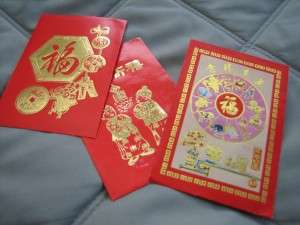
This is the year of the goat, (also called ram or sheep). Chinese celebrate for about two weeks with family reunions, festive banquets, symbolic decorations, red envelopes filled with money, and good wishes. The new year signals a time for renewal and is also called The Spring Festival.

Many foods eaten during the celebration have symbolic meanings. They may resemble or their name sounds like something that is auspicious. For instance spring rolls look like gold bars, kumquats resemble gold coins, open clams represent new opportunities, green vegetables suggest growth in business, noodles symbolize long life.

In preparation for talks I am giving later this month, I posted a question in an international Hakka group on Facebook. I asked them “Do you serve any special Hakka dishes for Chinese New Year?”

Here are some of the answers I received. Some are regional specialties or Hakka classics. Some are fancy dishes; others beloved humble family favorites. Responses came from Hakka from all over the world so the spelling for the Chinese names may differ than what you know. Maybe you will see some of your favorites here. 
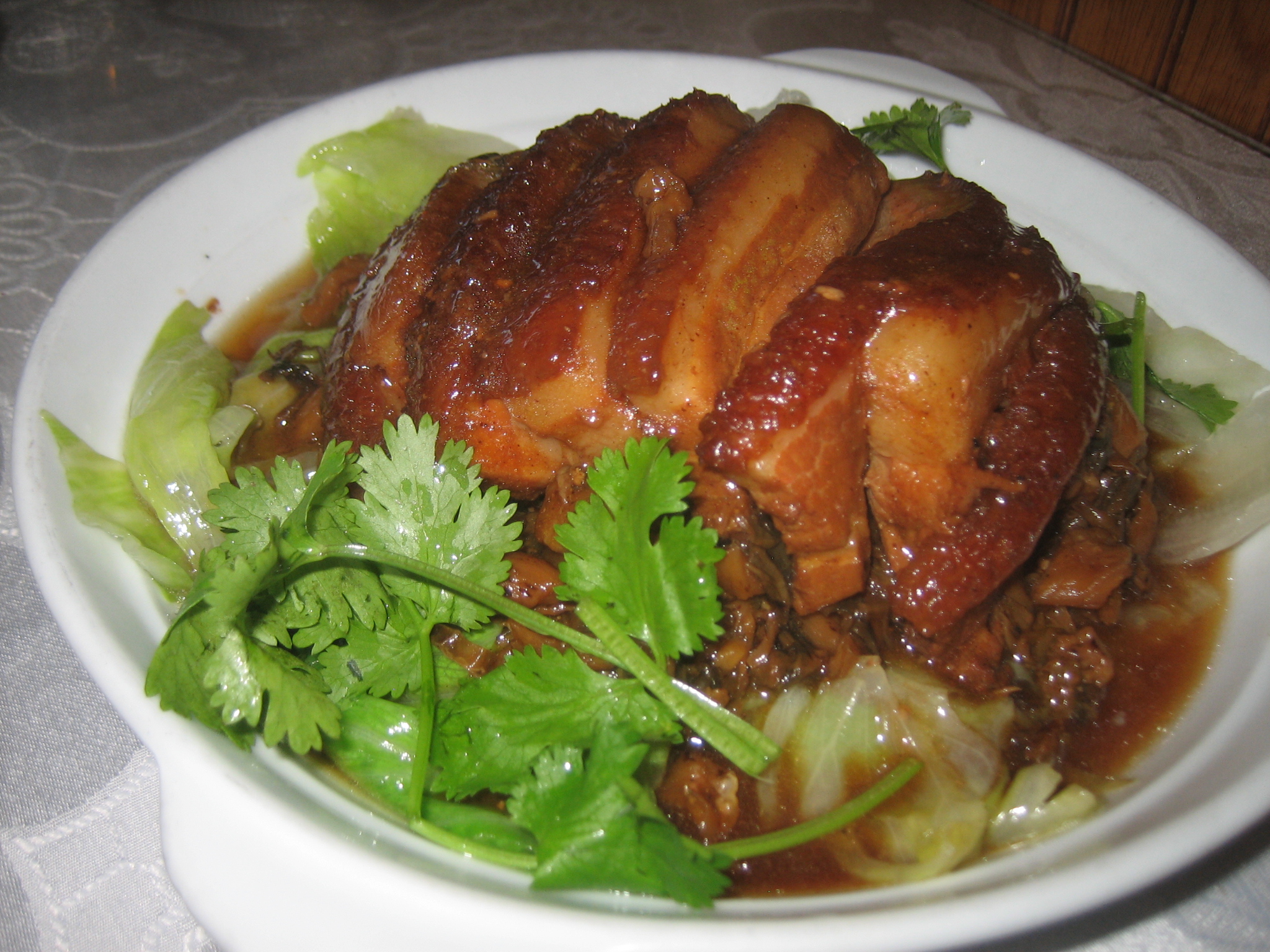
Pork Belly with Preserved Mustard Greens

Pork Belly with Preserved Mustard Greens

  • Pork belly with preserved mustard greens (kiu ngiuk moi choi)
  • Steamed minced pork with egg (choo nyuk jin gai choon)
  • ABC soup (lo song tong): soup with potato, carrot, onion, red dates, dry groundnuts, goji berries, meat or chicken carcass
  • Steamed fish with pickled mustard greens, red dates, tomato, and lily buds
  • Fried duck with plum sauce
  • Yellow wine chicken (wong jiu gai)
  • Pineapple chicken
  • Buddhist vegetarian stew (lo hon zai) Eaten on the first day of new year
  • Steamed chicken with salt (pak zm gai)
  • Fish maw soup (oem biao tong)
  • Sweet and sour duck (son moi ap)
  • Braised stuffed oysters with fat choy, and chestnuts (ngiong haw see)
  • Slice of pork liver wrapped in caul fat
  • Steamed fish with Chinese white radish in sweet and sour sauce (lo ped oem)
  • California squid with salted mustard green (ham choy)
  • Dried squid with celery
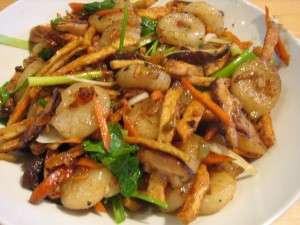
  • Stir-fried chicken with arrow root and vegetables
  • Surinamese Hakka-style chow mein made with spaghettini
  • Eight treasures duck (pat mui ap)
  • Black bean beef bone soup

What’s your favorite Chinese New Year dish? Here are some Hakka specialties featured in The Hakka Cookbook.  Have a delicious and Happy New Year! Khiung Hee Fat Choy!


Comfort food: mustard greens soup

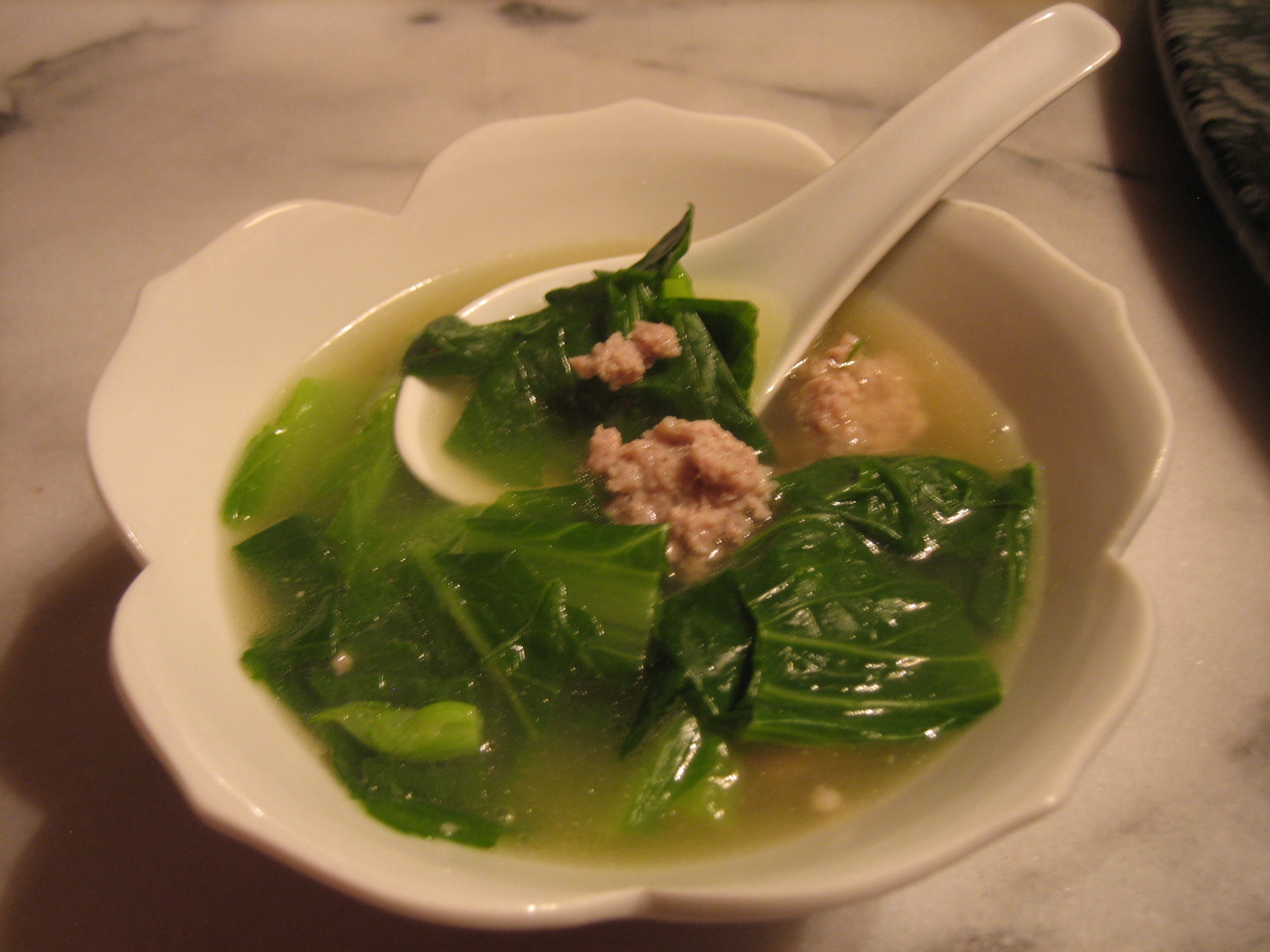
mustard green soupOn a cold wet night, all I want is a bowl of Mustard Green and Pork Soup. The hot broth enriched with pork, garlic, fresh ginger, and pungent mustard greens sends warmth throughout my body and comforts my soul. With a scoop of hot rice, it turns into a whole meal in a bowl.

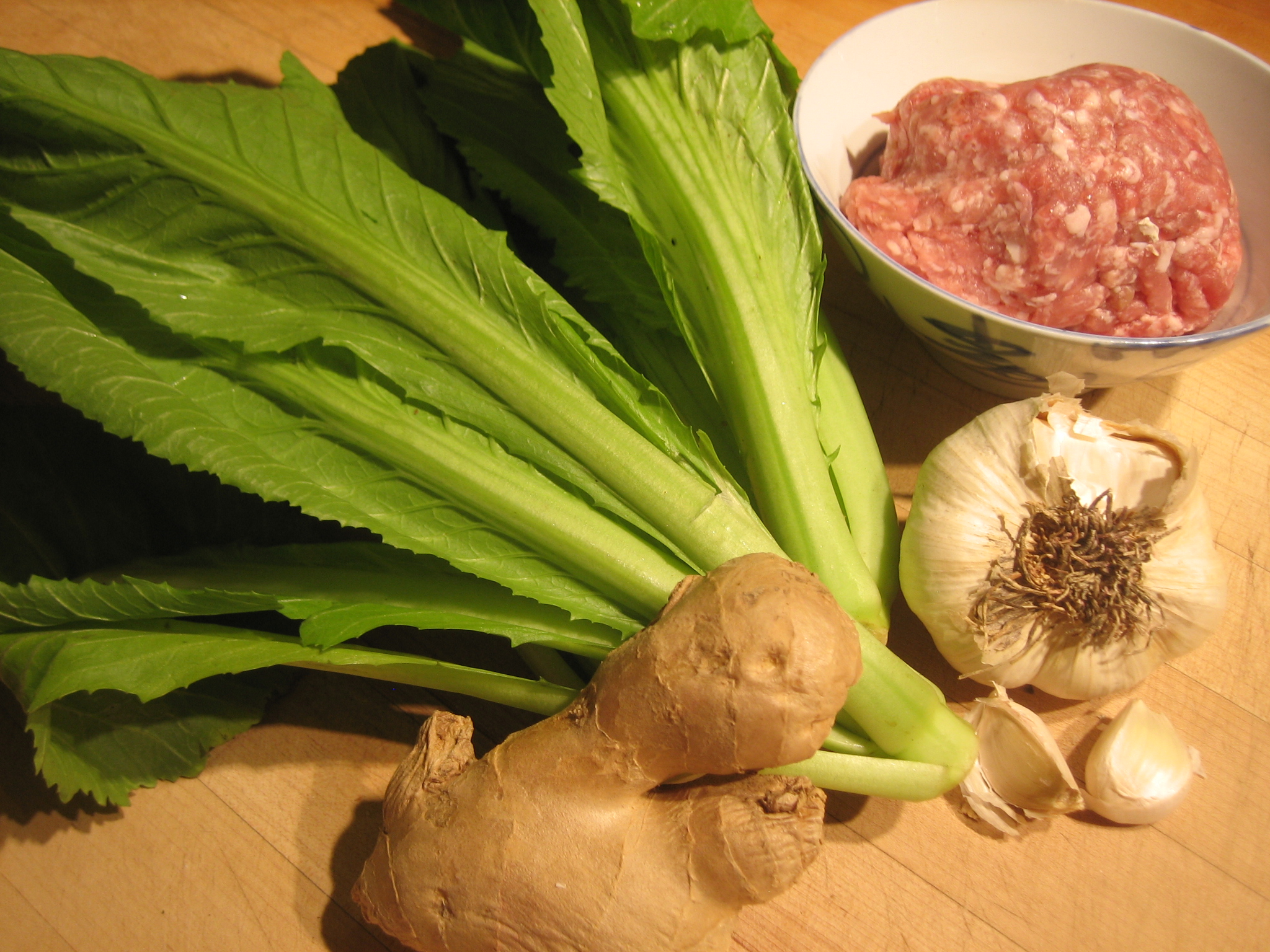
Ingredients Mustard green soupThe simple, bold, direct flavors come from just a few ingredients. Start by cooking pork, crushed garlic, and ginger slices in broth. If you have time, use chunks of pork butt or bone-in pork neck. Simmer until the meat is very tender. For a fast shortcut version, use ground pork seasoned with garlic, salt, and pepper. Poach chunks of the pork mixture in the broth, then immerse loads of mustard greens into the hot soup. It’s so easy, you don’t need a recipe but if want one, look at page 26 in The Hakka Cookbook.

I find almost any type of mustard green works. Buy Chinese mustard greens at the farmers’ or Asian market. Or choose leafy varieties found at the supermarket.

Sometimes I embellish the soup with the addition of sliced carrots and chunks of tofu, or replace the pork with chicken. In almost any variation, it is a feel-good meal.


Recipes for Hakka lei cha

Lui cha and garlic riceLast year I wrote about a pounded tea known as lui cha (Hakka) or lei cha (Mandarin). I discovered this dish in Malaysia and Singapore where it has a reputation as a super food that cures all. Basically there are three parts to this healthy savory rice bowl: the herbaceous tea, rice, and toppings for the rice.

Recently, Louisa Lim of The Star Online (headquartered in Malaysia) wrote about eighty-year-old Yong Mow who still makes Hakka lei cha everyday. I am in awe. She must be a super woman. This dish requires lots of muscle and time to pound the tea in the traditional way. With a sturdy stick from a guava tree, she vigorously pounds fresh herbs, tea leaves, sesame seeds, and nuts in a ceramic bowl, adding water to make a creamy green tea. She also cuts and cooks fresh and preserved vegetables for the toppings that go over rice that she has cooked in hot sand until the grains are puffy. This dish is a labor of love.

My recipe for Savory Pound Tea Rice (page 119 in The Hakka Cookbook) is similar to hers, but a lot easier. I cheated. I used a blender. Guess I am a weakling. I tried the mortar and pestle but gave up when I couldn’t achieve a smooth mixture.  If you want follow Hakka tradition, here is a recipe adapted from Yong Mow’s technique for The Star Online.

The article also mentioned The Hakka Cookbook and my recipe for the sweet version of this tea found in Taiwan.

Enjoy the savory or sweet versions of this Hakka specialty. Or for modern new version try this Lei Cha Salad from The Star Online.


Indo-Chinese fusion cuisine

Cumin BeefLast night I made one of my husband’s favorite recipes in The Hakka Cookbook, Stir-fried Cumin Beef (page 183). This recipe is a delicious example of creations from Hakka chefs from India. They invented a cuisine that merges Chinese techniques and ingredients with Indian spices. The result is fiery fusion that appeals to their Indian customers and made Chinese food so popular in India. Although it is not traditional Chinese Hakka food, I love the vivid, bold, spicy flavors.

The editor of Flavor and Fortune, Jacqueline Newman, first introduced me to this exciting cuisine at Tangra Masala, a restaurant owned by the Lo family in Elmhurst, New York. The flavors exploded in my mouth.

Later in the Toronto area of Canada, I discovered a large community of Hakka. Many of the chefs from India owned restaurants serving this Indo-Chinese fusion cuisine. Anthony Lin, owner/chef of the Danforth Dragon shared some of his recipes with me. I often make his cumin beef. Stir-fry thin beef strips and season with soy sauce, onion, garlic, ginger, and lots of spice, including cumin seeds and three forms of chile: chopped fresh chiles, dried chile flakes, and chile sauce. It is dry stir-fry without sauce, just lots of seasonings clinging to the meat.

For specifics follow the recipe on page 183 of The Hakka Cookbook. Or create your own version, tailoring the spice and heat level to your taste. Once I added slivers of red bell pepper to my cumin beef which added a shot of bright color. You can substitute chicken thigh for the beef.  Eat with lots of rice. Enjoy this culinary merger created by the Hakka chefs from India. You will love it!

Chinese summer squash, loofah

loofah squash, peeledLast month I saw a friend in the farmers market who had just bought some loofah squash. She told me how much she loved it. Her enthusiasm prompted me to buy some. Loofah squash (aka angled loofah, silk squash, Chinese okra) is long and slender with a rough dull green skin. Protruding ridges run down the length of the squash. Inside, the flesh is white and soft which turns silky, slightly sweet, and delicately refreshing when cooked.

Until I wrote The Hakka Cookbook, I rarely cooked this Chinese summer squash. When my friend Fah introduced me to her recipe Loofah Squash in Egg Flower Sauce (page 216), I discovered its sweet silky nature when gently braised. In Hong Kong, I ate Steamed Loofah Squash with Toasted Garlic Crowns (page 81). Click here to see a food video on this recipe.

Lately, I have discovered it’s firmer nature when stir-fried. I do not add a lot of liquid so the squash does not soften as much. I find this vegetable tastes light, clean, and refreshing, just right for hot summer days.

Loofah and ChickenStir-fried Loofah Squash and Chicken

If desired, omit the Chinese sausage and step 2. In step 4, increase the oil to 2 tablespoons.

Makes 2 servings as a main-dish or 4 to 6 servings as part of a multi-course meal

1 boned and skinned chicken breast half (8 oz.), sliced into thin strips

2 teaspoons soy sauce

1 teaspoon cornstarch

1 teaspoon plus 2 tablespoons vegetable oil

1 pound angled loofah squash (about 2 large squashes)

1 Chinese sausage (lop chong), thinly sliced

1 tablespoon thinly slivered fresh ginger

1/2 teaspoon salt, or to taste

3 tablespoons Chinese rice wine (shaoxing) or dry sherry

2 tablespoons chopped cilantro


1. Mix the chicken with the soy sauce, cornstarch, and 1 teaspoon oil.

2. Trim ends off squash. Peel off ridges and skin if tough (if skin is tender, you can leave some on for firmer texture.) Cut squashes diagonally into 1/4-inch thick slices.

3. Set a 14-inch wok over medium-low heat. Add Chinese sausage and cook, stirring occasionally, until sausage is browned, 4 to 5 minutes. Lift out sausage and place in serving dish, leaving the fat behind in pan.

4. Return the pan to high heat. When the pan is hot, add 1 tablespoon oil and rotate pan to spread oil. Add chicken and stir-fry until lightly browned, 2 to 3 minutes. Lift out the chicken and add to sausage.

5. Return the pan to high heat. Add 1 tablespoon oil to pan. Add ginger, squash, and salt. Stir-fry to coat squash with oil. Add the wine and stir-fry until squash is barely tender-crisp, 2 to 3 minutes. (If squash is not tender and begins to burn, add 1 to 2 tablespoons more water and continue stir-frying). Stir in sausage and chicken, Sprinkle with cilantro and scoop into serving dish.