Fermented black beans

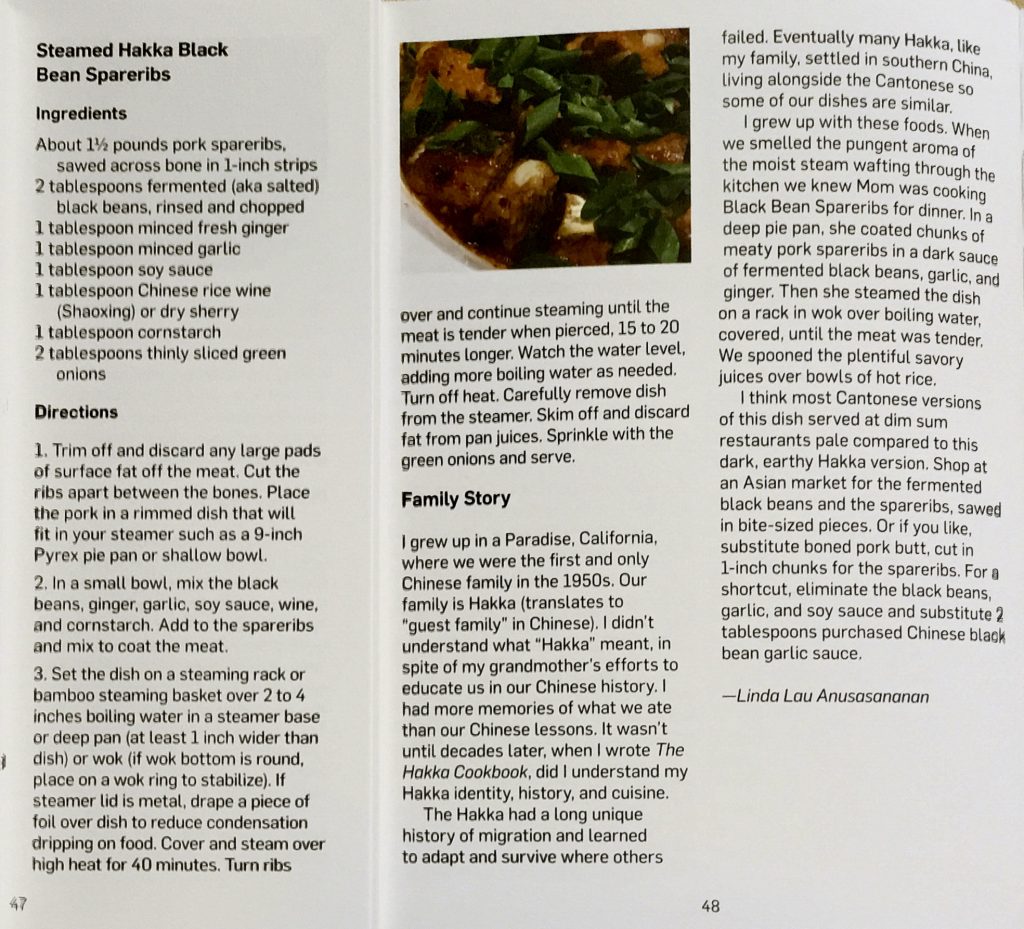
The key ingredients in black bean and garlic sauce are pungent, earthy fermented black beans and garlic.

The secret to adding robust, savory, salty nuances to food comes in the form of small black beans. These flavor capsules are soy beans fermented with salt and spices until pungent and aromatic. Called fermented black beans, salted black beans, preserved black beans or dou chi or dul see, they magically add a remarkable depth of flavor.

For instance, my mother often stir-fried cauliflower with fermented black beans. She would rinse the beans, then mash them with garlic with the end of the wood handle of her cleaver to make a coarse paste. She would mix the paste with minced fresh ginger and a little soy sauce. Then she would stir-fry the sauce with ground beef and cauliflower. The sauce contributed a earthy pungency to the somewhat bland cauliflower The recipe is on page 27 of The Hakka Cookbook. If you’re in a hurry, use a purchased black bean and garlic sauce found in many supermarkets. I find the Lee Kum Kee brand to be a good, widely available brand.

Chinese comfort food, Cauliflower and Beef in Black Bean Sauce

Look for fermented black beans  sold in plastic bags or round yellow cartons in Asian markets. The fermented black beans keep almost indefinitely stored airtight in the refrigerator. I also love a few black beans sprinkled over steamed fish or pork. Add a spoonful to stir-fried meat and vegetables. It is remarkably versatile and so delicious.

Be Sociable, Share!

Tea with Hakka Food

Yearning Tea Plantation in Meizhou China

A few weeks ago, Winnie Yu, one of the owners of Teance Fine Teas in Berkeley, California hosted a book signing event for The Hakka Cookbook. In the zen-like atmosphere of this tea shop designed by Fu-Teng Cheng, the tea shop staff served several recipes from my book with premium teas while  I talked about my Hakka journey. The enthusiastic audience was relaxed and totally engaged. Perhaps that is the magic of drinking premium teas with food, it soothes the soul and creates energy.

Speaking at the tea bar at Teance Fine Teas in Berkeley, California.

Winnie says, “Appreciating artisanal teas is a lot like appreciating great wines.” For our event, she served mostly fine oolong teas, semi-oxidized and roasted teas that seem to go with a wide variety of foods. I think of oolong, similar to a Pinot Noir, with lovely aromas, complex flavors, and a full-bodied palate. The oolong teas can range from greenish and floral to darker and fruitier. We started with Old Grove Shuixian with dark cinnamon notes that we drank by itself while we waited for guests to assemble.

Behind the scenes, samples from The Hakka Cookbook to serve with tea at Teance.

We sipped the full-bodied Tieguanyin Light Roast with Salt-baked Shrimp (page 62) and  Garlic Chile Eggplant Sticks (page 56). Phoenix Almond Oolong with the taste of almonds complemented the neutral Steamed Rice Cake (page 174) with the sweet-sour-medium hot Pickled Red Chiles (page 72). We tasted the spicy-sweet Taiwan Beauty with the Chewy Rice Morsels in Sweet Peanut Powder (page 97).  With the robust flavored Braised Taro in Bean Sauce (page 219), we drank a Red Plum Black tea, a darker, fully oxidized tea.

This book event reminded me of our afternoon at a tea plantation on our scouting trip in China. In the mountains of Meizhou, we visited the Hakka owned Yearning Tea Plantation. There we tasted the local dancong tea, an oolong tea noted for its ability to soothe the throat. The company logo, a flying wild goose, represents the Hakka fleeing from the north to the south, a fitting tribute to tea and the Hakka.


Be Sociable, Share!

A Hakka feast

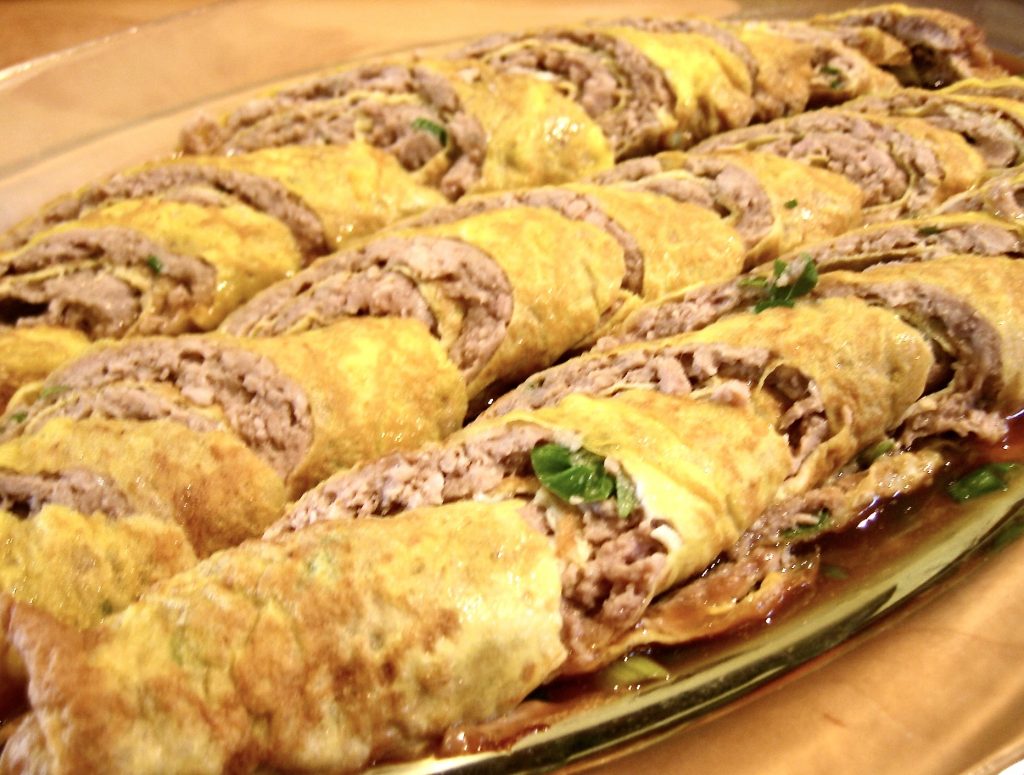
Minced Pork with Lettuce Wraps

I discovered the Hakka Restaurant when I was almost done with the research for my book. Luckily I was able to include talented Chef Jin Hua Li and a couple of his recipes in my book. When the San Francisco Professional Food Society (SFPFS) asked me to put together a menu from the Hakka Restaurant for their Traveling Table, a program that explores the bay area’s unique restaurants, I was happy to share his delicious food with them. Here’s the menu.

Minced Pork with Lettuce Wraps
Bamboo Pith Seafood Soup
Chinese Bacon with Preserved Greens
House Special Pan-Fried Tofu
Fried Pumpkin Strips coated with Salted Egg Yolk
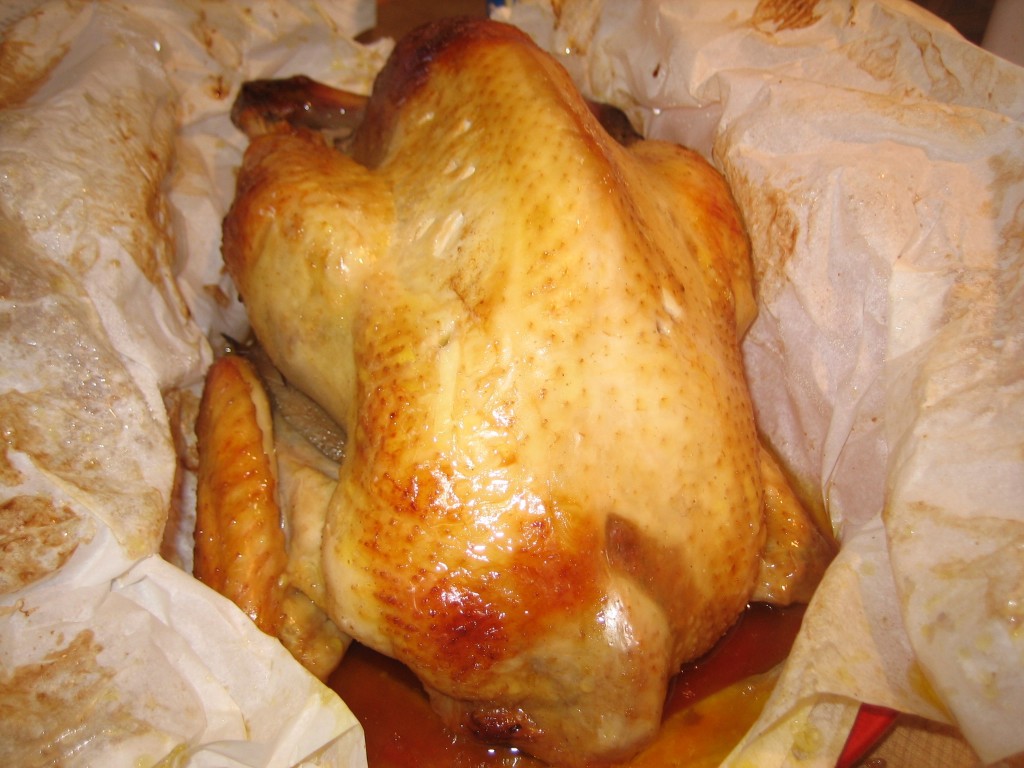
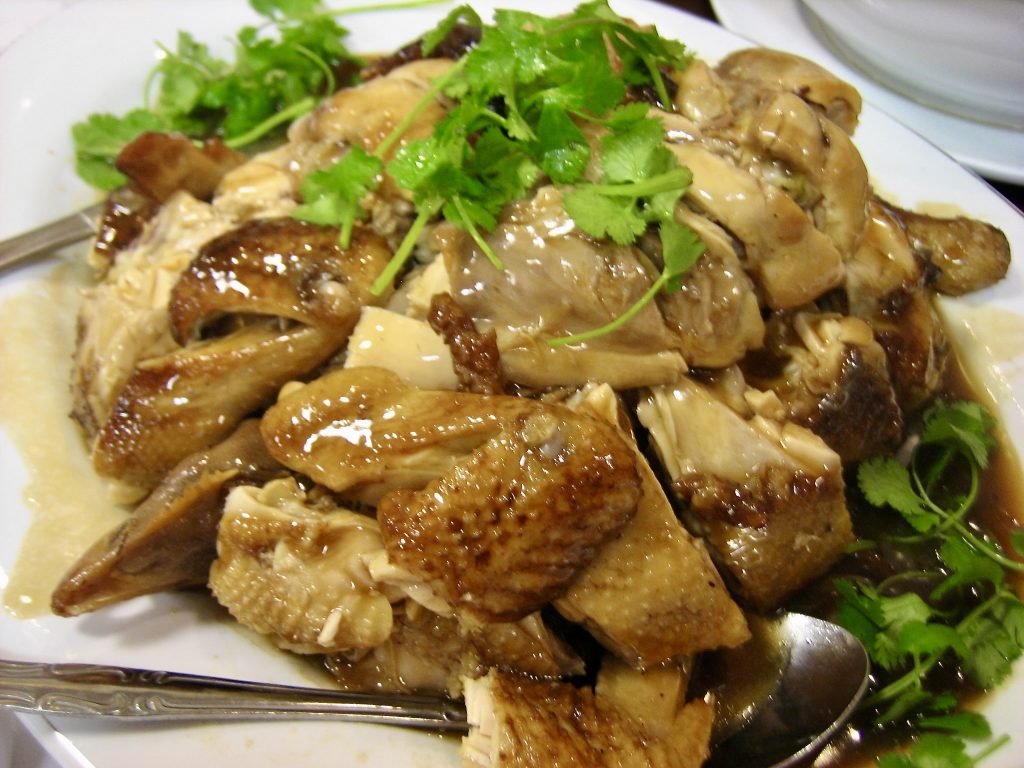
Chicken Stuffed with Preserved Greens (recipe pg. 233)
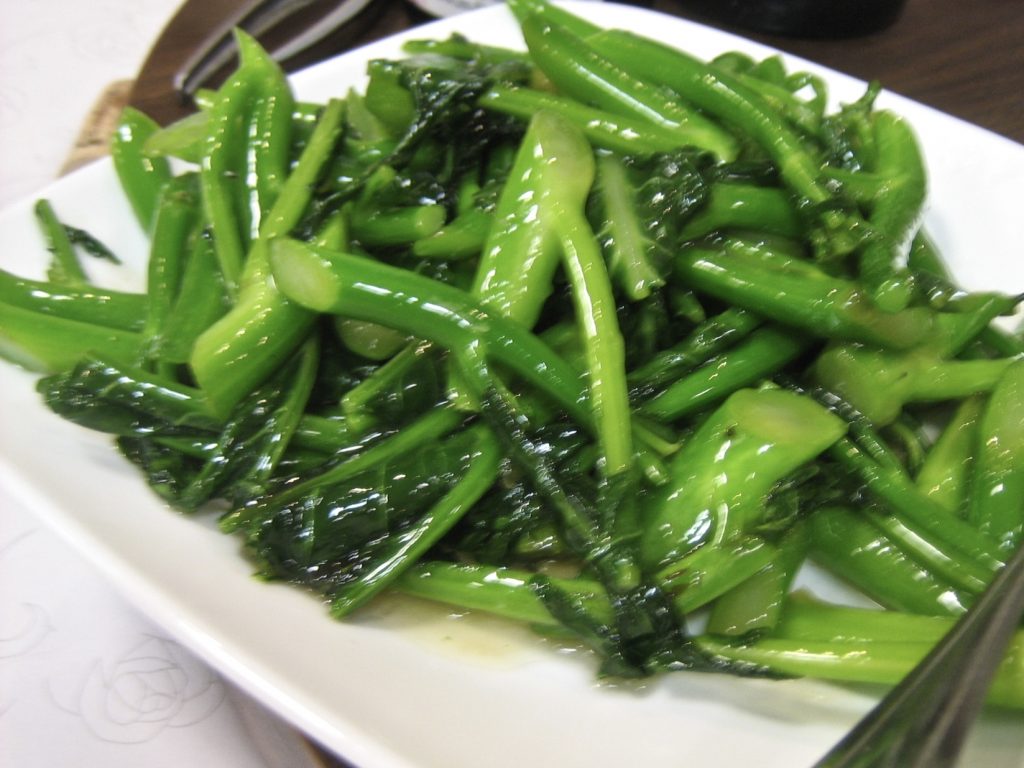
Stir-fried Chinese Broccoli with Rice Wine (recipe pg. 230)
Clams with Spicy Salt and Black Beans
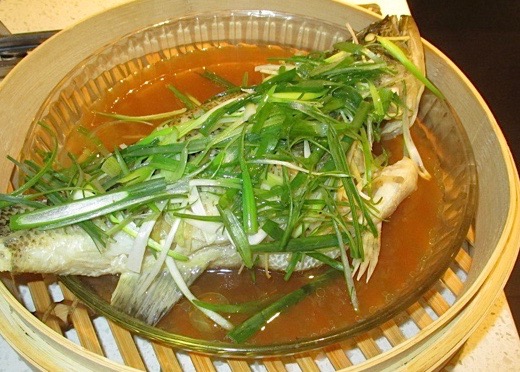
Home-Style Steamed Sea Bass
House Special Eggplant
Steamed Rice

The lettuce wraps uses a well-seasoned pork as a simple filling for crunchy lettuce leaves. The mild soup, focuses on natural flavors and offers a light contrast to the more robust flavors in the meal.  The House Special Pan-Fried Tofu and the Chinese Bacon with Preserved Greens are Hakka classics. The Chicken Stuffed with Preserved Greens is one of Chef Li’s specialties, order a day in advance. The chicken is filled with a savory mix of preserved mustard greens, mushrooms, and pork, then braised.

Chicken stuffed with Preserved Mustard Greens at the Hakka Restaurant

The steamed fish is topped with a shower of typical Hakka ingredients pickled mustard greens and shreds of pork. Both the clams and eggplant dish reflect adaptations to local tastes as the Hakka migrated. The clams exude a spiciness reminiscent of Sichuan province.  The clams are deep-fried in their shells then stir-fried with fermented black beans, ground pork, chiles, garlic, and sometimes Sichuan peppercorns.  The tender eggplant tastes mildly sweet, sour, hot and aromatic with basil and cilantro, hinting of Thai seasonings. Hakka settled in both these areas, China’s Sichuan province and Thailand.

Everyone loved the meal. I think you will, too. The Hakka Restaurant is located at 4401-A Cabrillo Street (corner of 45th Avenue), San Francisco, CA 94121. Tel. 415. 876. 6898.

Be Sociable, Share!

How to make wontons

Ready to make wontons? Start with a great filling. I have a delicious option in The Hakka Cookbook, page 148. Ground pork is flecked with dried orange peel (use fresh, if you don’t have dried). Tianjin preserved vegetables (use soy sauce as a substitute) contribute a savory saltiness.  And chunks of water chestnut pebble the filling with crunchy texture. Use the mixture as a filling for wonton or pat it into even layer and steam to make a juicy pork hash, Chinese comfort food.

For wonton, wrap the filling in a square pasta-like wonton skin, available in supermarkets and Asian grocery stores. There are many ways to fill wonton. My three-year grand daughter proved that to be true as she created her own technique for filling them. When boiled, it doesn’t make much difference. When I wrote the recipe to make wontons, I tried to find the technique that would be the most easily understood without photos. Unfortunately, the publisher had no budget for photos but you can see them here.

Place filling in center of wonton skin. Fold skin over filling to make a triangle. Pull ends down and seal tips with a little beaten egg.

For fried or boiled wontons, try this method: Place a wonton skin on a flat surface with a corner facing you. Cover the remaining skins with plastic wrap to keep moist (this is important, if they dry out they will crack when folded). Mound 1 level teaspoon of the pork filling in the center of the wonton skin. Fold the bottom half of the skin over the filling to make a triangle. Moisten one side corner of the base of the triangle with a little beaten egg. Now this is where it gets tricky without visuals. Pull the side corners down below the filling and overlap; press to seal. They should sort of resemble a tortellini with a triangular flap. I wanted to say “resemble a nurse’s cap” but nurses no longer wear white starched caps with wing-like flaps.

Place filling in center of wonton skin. Gather wonton skin up and around filling. Squeeze gently so filling sticks to wrapper.

If this seems too complicated, you can simply drop the filling in the center of the wrapper. Bring the wonton skin up around the filling, gather the skin around the filling and gently press the moist meat to the wonton skin so it sticks. I think this method is better for boiled wonton, but they can be fried. They’re just not as pretty as the first method when fried.

The filled wonton can be placed on flour-dusted baking sheets. Cover them so they don’t dry out. When done filling the wonton, cook, refrigerate for up to 8 hours, or freeze. When solid, pack the frozen wonton in containers, ready to boil whenever you need a quick meal or snack.


Be Sociable, Share!

Best Chinese Cuisine Cookbook in the World

A couple of months ago I was notified that The Hakka Cookbook was the USA finalist and on the shortlist for the Chinese Cuisine category in the Gourmand World Cookbook Awards. The award ceremony would take place in Paris. At first, I thought Paris seemed an expensive trip to go for an award I was unlikely to receive. Yet, I might never have another chance for this experience. Any excuse to visit Paris seemed good enough, win or lose.

Last weekend we sat in a ballroom packed with people, some dressed in backless gowns, Japanese kimonos, or Russian costumes. Finalists were from all over the world— Malaysia, Australia, Mexico, Ireland, China, Turkey, India, South Africa. People were just as excited as if they were at the Academy Awards. As the awards were announced, the winners came to the stage, received a large certificate (sorry, no golden statue), and a brief chance to thank their supporters.

Shock, disbelief, joy–these emotions flooded through me as I heard the host of the ceremonies announce, “We have a tie for first place for best Chinese Cuisine Cookbook in the World.” I looked at the screen on stage and my book, The Hakka Cookbook appeared alongside China’s finalist Da Dong Artistic Conception of Chinese Cuisine. I couldn’t believe it, my modest book, which took years to find a publisher was awarded Best Chinese Cuisine Cookbook in the World for 2012. My husband was so shocked, he almost forgot to take photos as I walked to the stage to receive my award certificate.

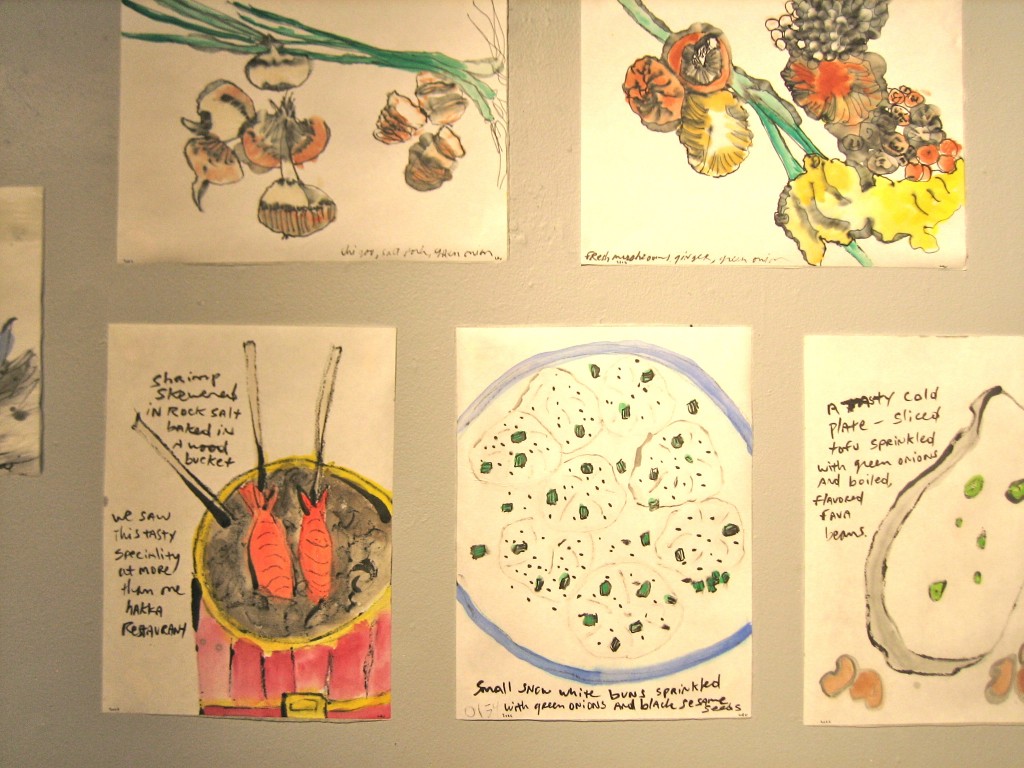
The day after the awards, I compared the finalists in my category. Interestingly, the two first place winners were complete opposites. I would almost consider the book from China an art book. Big and beautiful with glossy pages of lush color photos of stylized dishes, it seemed to be made for the coffee table rather than the kitchen. Recipes were chef-oriented. The Hakka Cookbook, the only finalist without color photos, used duo tone paintings by my brother, Alan Chong Lau, to illustrate the pages. Detailed recipes for comfort food was written for home cooks. Yet the book also contained history, and stories about the Hakka, a people and cuisine rarely written about. Perhaps the judges awarded both of us for innovation in different ways, we both explored new territory in unique presentations. Whatever the reasons, winning made my trip to Paris, even sweeter.

Be Sociable, Share!

My favorite woks

Stir-frying in an enamel clad cast-iron wok. Twenty-five year old carbon steel wok rests in foreground.

At my Hakka cooking party, I brought woks for stir-frying. Although we could have used a 12-inch frying pan, I find the wok far superior. With its bowl-like shape and great heat conductivity, the wok is one of the most versatile pans there is. Use it for stir-frying, braising, deep-frying, steaming, pan-browning, boiling, and smoking.

My friends questioned me about the woks. Many had admitting once owning a wok, but gave it away. Think of a wok like a cast iron frying pan. You need to scrub it, then season it with oil to seal the pores. Use it often and it develops a non-stick patina. Once you get the hang of it, you will use the wok for everything.  Besides Chinese stir-fries, I use the wok to make spaghetti sauce, stews, and even popcorn. It will last forever. It’s the best pan for camping trips, versatile and rugged.

“Which wok should I buy,” they asked. The wok should measure about 14-inches across. This is a good size for most home ranges. With gas burners you can use a flat or round bottom wok. Round bottom woks need a ring to stabilize the pan when used for steaming or deep-frying.  With electric burners, choose the flat bottom wok.

I brought two woks. One is a traditional carbon steel round bottom wok with one long wood handle and a short handle on the opposite side. The long handle is easy to grasp when stir-frying and sits on my gas burner. However, for most people a flat bottom version of this wok might be preferable. My wok is more than twenty-five years old and has a dark patina from frequent use. About seven years ago, Tane Chan of The Wok Shop in San Francisco gave me a two-handled enamel-clad cast iron flat-bottom wok which I use almost everyday.  Both are priced under $25.

To season these woks, scrub them well, inside and out. Coat the surfaces  (no need to coat enamel exterior) with a light film of neutral flavored vegetable oil. If there are wood handles, remove or wrap with a damp cloth and foil. Bake, upside- down, in a preheated 425° F oven for about 20 minutes. To remove the metallic taste,  place wok over medium heat. Add 2 tablespoons oil and cut-up onions or Chinese chives and stir-fry, pressing vegetables into the pan, until about two-thirds of the pan turns black, 10 to 15 minutes. Throw out vegetables. Wipe off excess oil and you’re ready to stir-fry.

You need to use your wok, preferably often, to develop a patina. People give up on woks too soon.  Don’t scrub it too hard or you will remove the seasoning. Simply soak the pan until stuck-on food is soft, then wipe off and rinse. I dry the pan over a hot burner to make sure it is thoroughly dry. Storing a wok damp may cause it to rust. A wok should not be shiny and bright like a stainless steel pan. It’s a work in progress. The color of your pan will change as it is used and eventually develop dark color and natural nonstick finish.

An easy way to restore the patina is to pop corn it it. Simply place the wok over medium-high heat. When the pan is hot, Add about 3 tablespoons vegetable oil and 1/3 cup popcorn kernels. Cover the pan and shake pan often until popping subsides, 2 to 3 minutes. Pour out popcorn. The popcorn spreads the oil all over the pan evenly. Repeat, then wipe out excess oil. Your bonus is popcorn to snack on.

When buying your wok, also get a domed lid, curved wok spatula, and if buying a round bottom wok, get a wok ring. A good source to buy your woks is at The Wok Shop which is also online. My friend Tane Chan can guide you.


Be Sociable, Share!

A Hakka cooking party

Linda, Nancy, and Ruby proudly display the dishes they cooked.

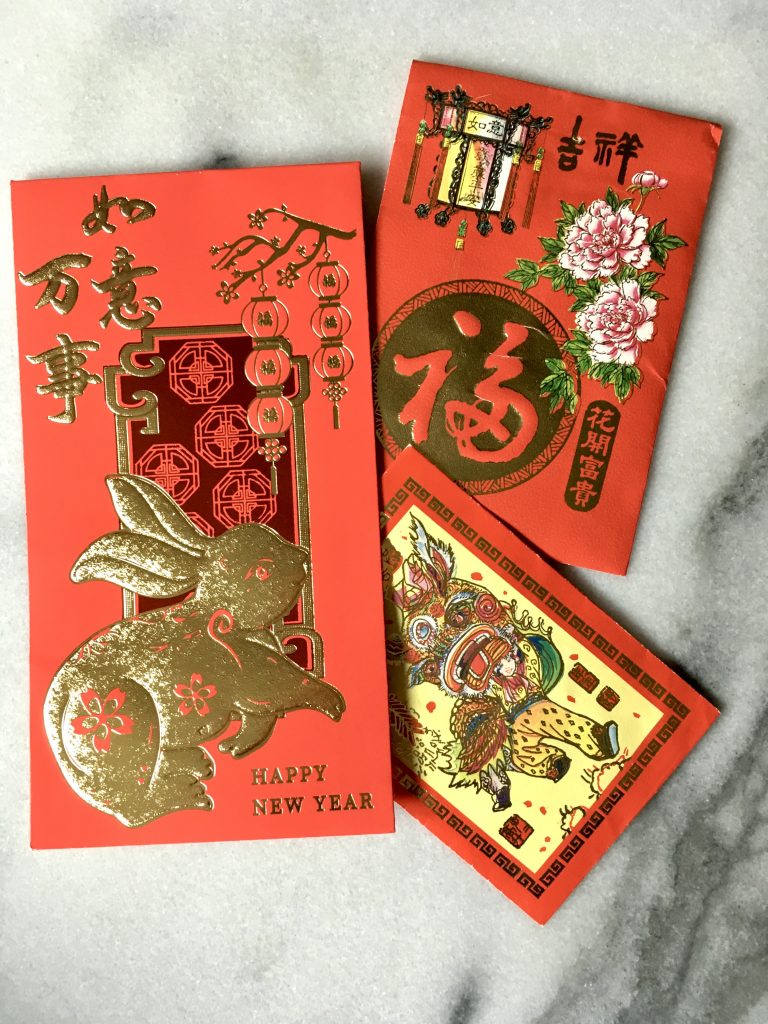
Gong Hee Fat Choy!  Happy New Year!  Chinese New Year is almost here. It arrives this Sunday, February 10. In the next couple of weeks family and friends will gather to share food and good wishes. In The Hakka Cookbook, you will find many recipes for specialties served for the New Year celebration.  Look under the Hakka Classics for recipes such as Salt-Baked Chicken or Steamed Pork Belly and Preserved Mustard Greens. But if you’re short of time or inexperienced in Chinese cooking, there are many other easy dishes you can cook for a festive meal. For me, the most important part of the celebration is getting together and reaffirming family unity and friendship.

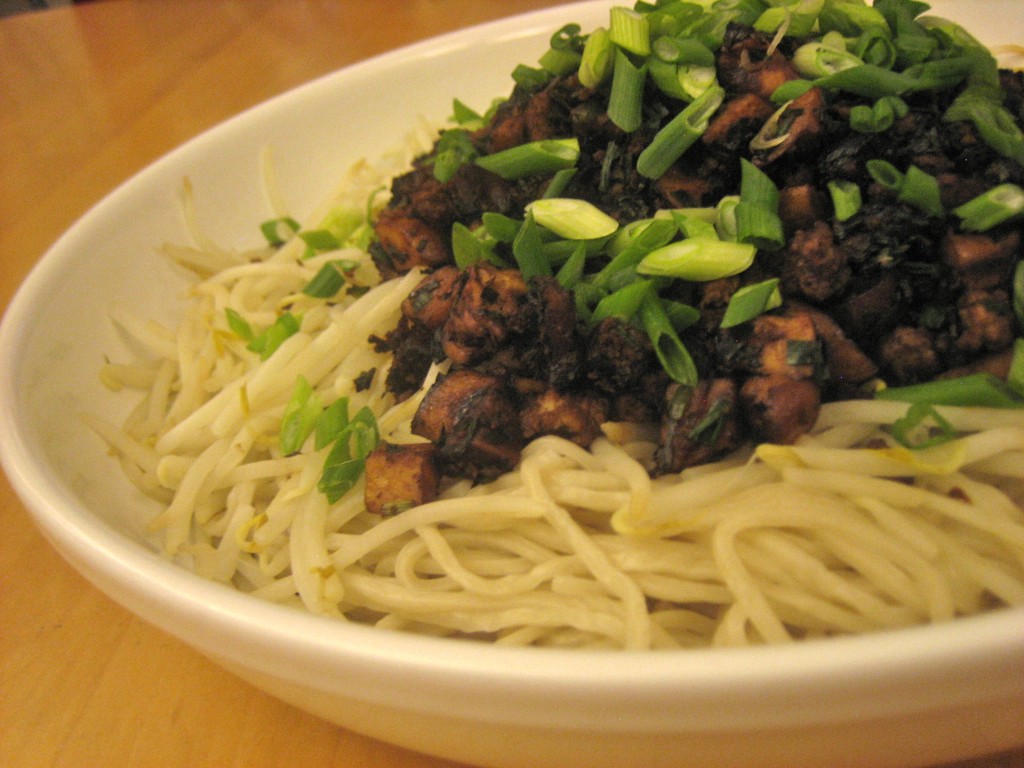
Here are two suggestions for easy Chinese parties that anyone can manage. In the February 2013 issue of Sunset Magazine, look for Build your own bowl by Amy Machnak, pages 84 to 87. The easy noodle buffet party is based on recipes adapted from The Hakka Cookbook.

The second option is a cooking party. It started when a friend suggested we get together and cook from The Hakka Cookbook.  Last weekend, eleven of us gathered at Karen and John’s home in Paradise, California, where we cooked and ate a multicourse meal from the book. I designed the menu using seven easy recipes from the book.  I proposed instead of trying to cook all the dishes at one time, that we would cook and eat the dishes in several courses, as they were ready. Less stressful for the cooks. People could claim one recipe to make or we could take turns cooking. Karen volunteered to shop and prep most of the ingredients. I would bring ingredients she could not locate and a couple of woks for stir-frying.

You could easily duplicate this plan for your own party. This menu works well for six to eight people.  We increased the amounts for a few dishes for our larger group, or you could add more dishes. We cooked rice in a rice cooker, which kept the grain hot throughout our leisurely meal. There was plenty beer, wine, and tea to sip throughout the afternoon. The meal ended with tangerines, cookies, Chinese sesame candy, and candied coconut.

We gathered around noon. It soon became evident, only the women were interested in the cooking as the guys settled outside with beers. Didn’t matter, we gals had a great time reminiscing about old times (we’re known each other since kindergarten) as we cooked our way through the menu.

The Hakka Cooking Party

Melanee serves steeped chicken to wrap in lettuce leaves.

First course: Steeped Chicken (p. 22) with Fresh Green Onion-Ginger Sauce (p. 66).  Or use this adapted recipe at specialfork.com  Melanee claimed this dish. The chicken and sauce could be up to a day made ahead and brought to the party, ready to eat on demand. She served the moist shredded chicken with lettuce leaves, as a pick-up appetizer.

Second courses: Cumin Beef  (p. 183)  We had extra beef so we doubled the recipe. However, because it is important not to overload the wok when stir-frying thin meat slices, I cooked the beef in three batches (6 to 8 oz. each) so the slices would brown, rather than stew in its juices. After the initial stir-frying, I returned all the cooked beef to the pan with all the seasonings for a final blending of ingredients.

Stir-fried Snow Peas and Tofu (p. 48).  This mild flavored vegetarian stir-fry offers a contrast to the spicy cumin beef. It’s a study of contrasting textures with crisp peas, spongy tofu, and crunchy black fungus.

Third course: Cauliflower and Beef in Black Bean Sauce (p. 27) Phyllis took a turn at the wok and stir-fried this easy meat and vegetable dish. Ruby said she was surprised she liked it because she usually doesn’t like cauliflower. The black bean sauce really adds flavor to this rather bland vegetable.

Karen cuts cauliflower for stir-fry.

Fourth courses: Braised Pork Spareribs in Bean Sauce (p. 203). Since the ribs took longer to cook than most of the other dishes, I cooked them the night before and brought them ready to reheat. I increased the recipe by half since it was just as easy to make more. The savory sauce was delicious over rice.

Chinese Broccoli and Sweet Rice Wine (p. 230). This simple vegetable dish takes only minutes to cook. Ruby learned to cut the vegetables so all pieces are the same size.

Shrimp with Fried Garlic and Chiles (p. 78). Nancy fried bits of garlic and spicy chiles to top stir-fried shrimp.

We ate from noon to five, cooking, eating, and drinking. I directed the cooking and gave hands-on lessons on stir-frying, woks, and ingredients. We found when there’s a lot of cooks, it’s best to have all ingredients prepped ahead of time. Then cooking moves quickly without too much concentration. Everyone agreed they learned a lot, ate well, and would do it again.

To design your own cooking party, follow this easy plan. Have each person or couple be responsible for one dish. The dish could be completely made ahead ( if it works for that dish), or prepped for cooking on site. You can use this menu or design your own based on your own tastes. People take turns cooking and serving their dish. It is sort of like a cooperative home-style Chinese banquet.  Enjoy and have fun!  Gong hee fat choy!


Be Sociable, Share!

Dedicated to the Hakka around the world

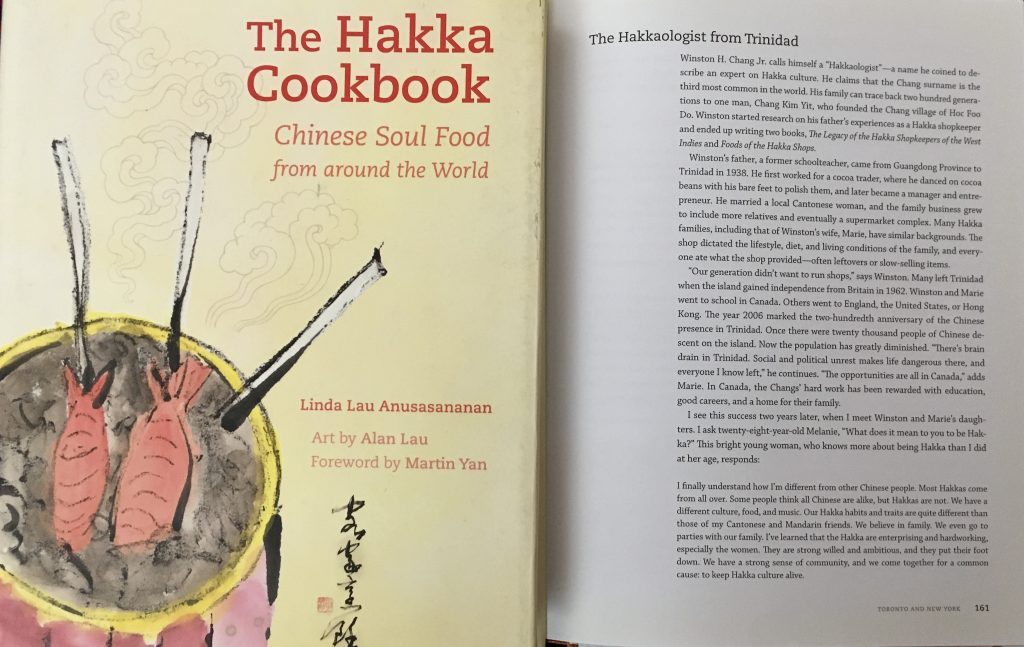
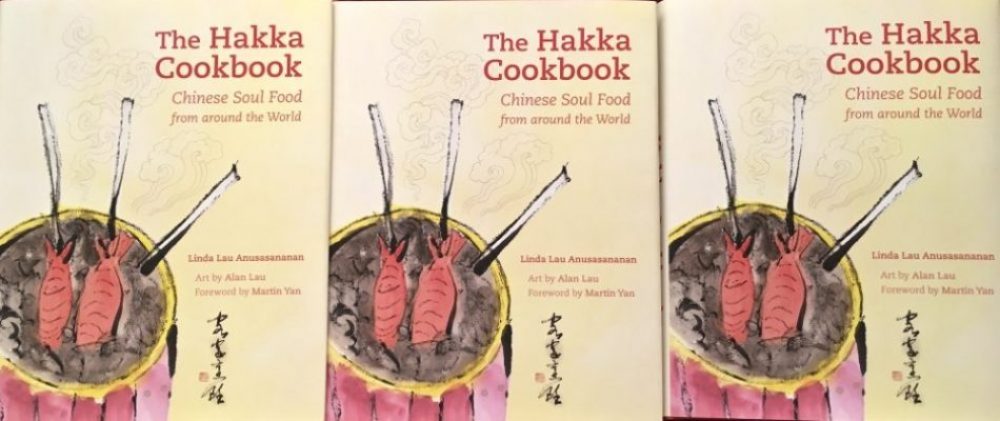
I dedicated this book to Hakka all around the world. That’s why I was so touched to read a post on Maya in the Morning by Maya Leland, a fellow Hakka who received The Hakka Cookbook as a gift.
In Roots uncovered, she writes about our shared history and most importantly she relays her own family story of migration from China to British Guyana to Jamaica. Her daughter-in-law even cooked one of the more exotic dishes in the book, Spiced Goat Stew with Preserved Lime Sauce, a recipe from a Hakka Jamaican who now lives in Toronto.

Reading blogs and reviews like this fulfills one of my goals for writing The Hakka Cookbook. Hopefully the book makes Hakkas as well as the world to be more aware of who we are, our unique history of migration, our strong character, and our food.

Thanks Maya.

Be Sociable, Share!

Save your culinary history

Natalie Com Liu cooks her Hakka dishes in her kitchen in Lima, Peru as I record her recipes.

Zester Daily invited me to write a piece for Soapbox.  I struggled over the subject and wrote several different drafts. Eventually I settled on “recording your culinary history.” I was inspired by a blog post written by Pat Tanumihardja for The Asian Grandmothers Cookbook a few months ago.

A few days after I filed the post, I learned about the unexpected death of one of my Hakka contacts in Toronto. That reminded me of another contributor, a young chef from Beijing who had also passed away a few years ago. Life passes quickly. I’m so glad I was able to record part of their history while they were still here.

If you always wanted to know how your grandmother, father, or great-aunt cooks their special dish, ask them now. With Chinese New Years coming up soon, it’s the perfect opportunity to capture some of those special dishes. Spend some time with them. Watch them cook, take notes, shoot photos or a video, and taste their food. Record their stories and history. They will be flattered and you will be able to pass on their culinary legacy. Pretty soon, you will be writing your own family cookbook.


Be Sociable, Share!

A lesson in soy sauce

Power to women! A few days ago, I gave a master class on Hakka Cuisine at the WCR (Women Chefs and Restauranteurs) National Conference in San Francisco.  This group of professional women in the restaurant business celebrated their 20th anniversary. It was an honor to meet such smart, strong, and supportive women. They reminded me of Hakka women, known for their hard-working characteristics and strength.

In my class, I provided a short tasting on different types of soy sauce, a primary ingredient in Hakka dishes. I thought I would share this information with you. Soy sauce is a seasoning liquid brewed from naturally fermented soy beans and wheat. It gives a deep flavor and rich color. The basic types are:

Soy sauce types: all-purpose soy sauce: Kikkoman or Pearl River Bridge Light Superior Soy Sauce; Koon Chun Black Soy Sauce; ABC Sweet Soy Sauce (kecap manis)

1. All-purpose soy sauce.  I simply call it soy sauce in the book. The Japanese soy sauce, such as Kikkoman has a higher percentage of wheat which mellows the sauce. Chinese soy sauce, such as Pearl River Bridge Light Superior Soy Sauce, contains a higher percentage of soy beans which produces a stronger flavor.  In Asia, this type may also be called light (not referring to sodium), white, or thin soy sauce.

2. Dark or black soy sauce. This soy sauce ages longer and is blended with a little molasses which lends a slight caramelized sweet finish. It is darker and has a stronger flavor which enhances the color of stews and braises. For a quick substitute, use 2 parts all-purpose soy sauce and 1 part molasses.

3. Sweet soy sauce. Often used in Southeast Asia. This dark, thick, syrupy sweet soy sauce is blended with palm syrup. The Indonesian version is called kecap manis. The Hakkas in India make a similar sauce and call it red sauce. They boil soy sauce, sugar, and fragrant seasonings such as ginger, lemon grass, tangerine peel, star anise, and cinnamon until the sauce is thick and glossy (recipe on page 269). Add the dark, intense, sweet sauce to noodles, stews, meats, and stir-fries, or use as a dipping sauce. For an quick alternative for cooking, mix equal parts dark (preferable) or all-purpose soy sauce and packed brown sugar.


Be Sociable, Share!