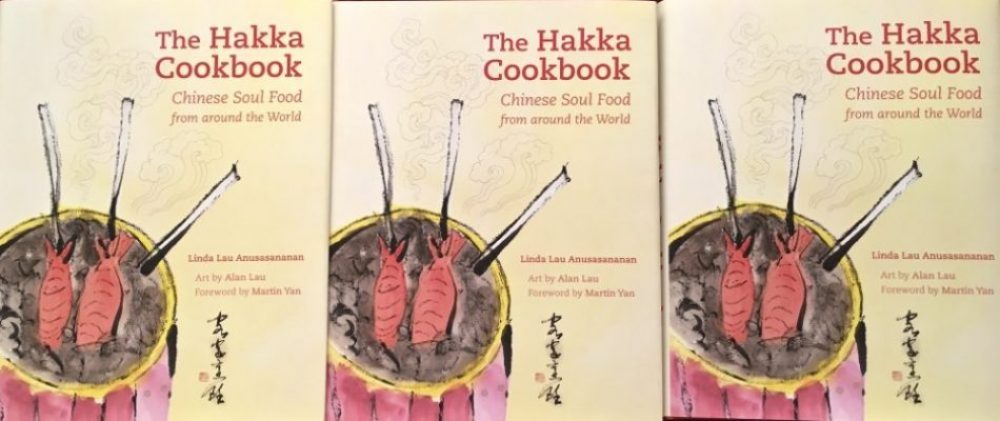
As the Hakka migrated from China throughout the world, they brought their foods and adapted to their new environments. Some business-saavy Hakka chefs created new dishes combining their cooking techniques and ingredients with the local foods. Local cooks also borrowed ingredients from the Hakka Chinese, creating new dishes with Hakka influences. We see this in Peru, Mauritius, and India. We now discover another example in Thailand.
On a recent episode on OTR Food & History, they explore the connection between the Hakka classic dish, stuffed tofu (yong tau foo or nyiong tiu fu)) with the Thai pink soup noodles known as yentafo. It’s a relationship that never occurred to me. But as the story unfolds, it makes sense.
In Thai, yentafo refers to stuffed tofu (yong tau foo) as well as the more well known, flamboyant pink noodle soup with a riot of toppings including tofu.
OTR’s host and writer, Adam Gottschalk, a former chef and restauranteur in China for 12 years, knows the Hakka stuffed tofu well. Now based in Bangkok, he’s familiar with the Thai street food noodles, yentafo.
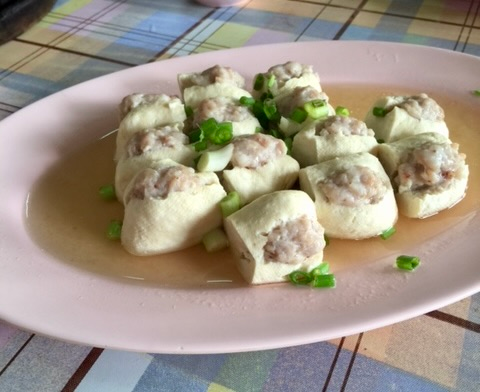
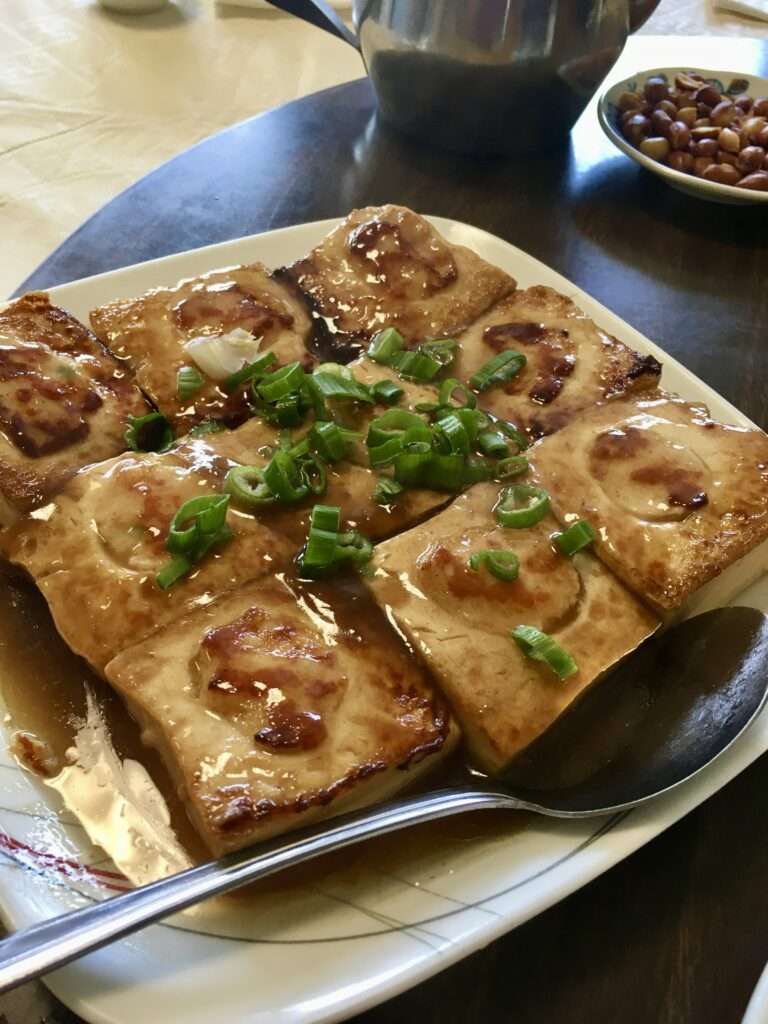
The two dishes look nothing alike. The Hakka pork-filled tofu comes in many preparations–steamed, pan-browned and braised, fried, or poached. They llook rather plain compared to the Thai pink soup with noodles and a kaleidoscope of toppings.
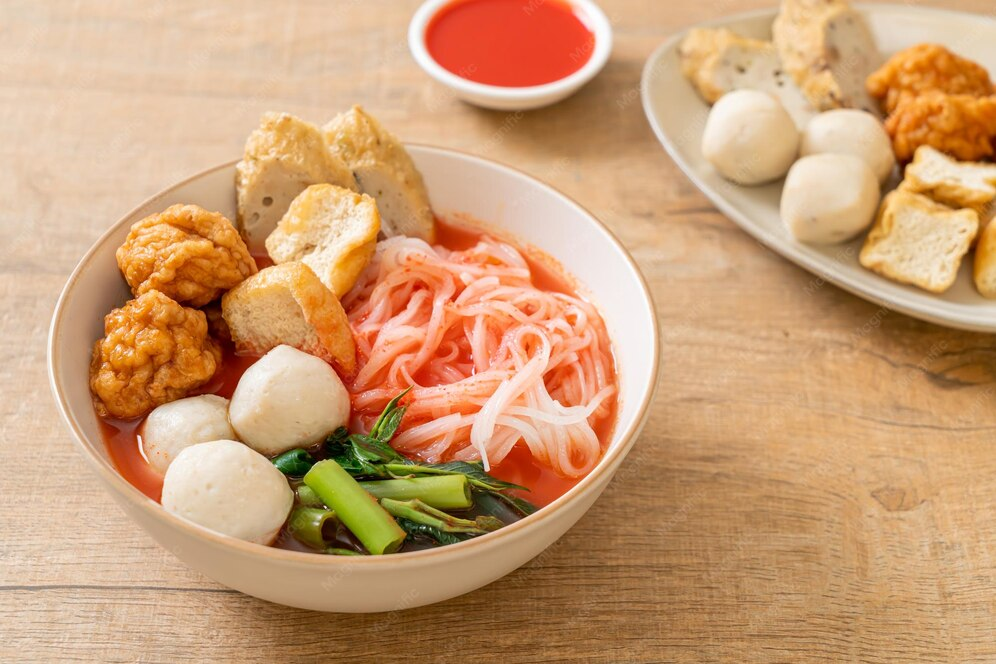
They taste quite different too. The Hakka tofu stuffed with pork tastes savory and earthy. The Thai soup is slightly tangy, sweet, funky, and spicy.
Starting in 1867 many Hakka fled the fighting in Guangdong and migrated throughout the world. Many settled in Malaysia and Singapore, but a few came to Thailand.
Among the foods they brought with them was tofu, made from ground soybeans. Because it had a neutral flavor, it was highly versatile. One of their Hakka specialities was stuffed tofu (yong tau foo or nyiong tiu fu)). When the Hakka moved to southern China from the north, there was no wheat to make wrappers for dumplings so they replaced the wheat wrappers with tofu, made from soybeans.
In Thailand, street vendors began to make money cooking their Chinese cuisine. Some added stuffed tofu to their noodles and sold them as Kuay Teow Khae or Hakka Noodles. By the 1950’s some of these street vendors added a pink sauce to the noodles.
The traditional sauce likely got its pink color and funky flavor from red fermented tofu or red bean curd (nom yu), a popular Hakka ingredient. The tofu was inoculated with a special mold and soaked in a brine with Chinese rice wine, salt, and dried red yeast rice until it ripened into soft, pungent, red chunks. The dried red yeast rice (kuk) acted as a natural food coloring and a preservative. It imparted a deep red color and faint mineral flavor to tofu, wine, soups, marinades, and sauces. Today, many vendors may replace the pungent red tofu with red food coloring.
For yentafo, cooks added ingredients to the Hakka noodles that would appeal to Thai tastes such as fish sauce, palm sugar, vinegar, and sriacha. These seasonings lent tangy, sweet, spicy flavors to the soup. The red sauce turned it pink. Vendors enticed the customers with a wide range of toppings such as stuffed tofu, tofu puffs, fried shrimp balls, pork balls, fried wonton, fish cake, squid, egg, water spinach, and jellyfish. For a shortcut, some vendors now use various forms of tofu but not always the Hakka stuffed tofu.
Yentafo began with the Hakka. The contribution of the Hakka ingredients of stuffed tofu and red fermented tofu inspired local cooks to create their own uniquely Thai reincarnation, yentafo.