About lla

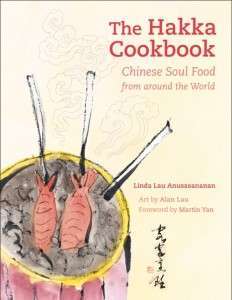
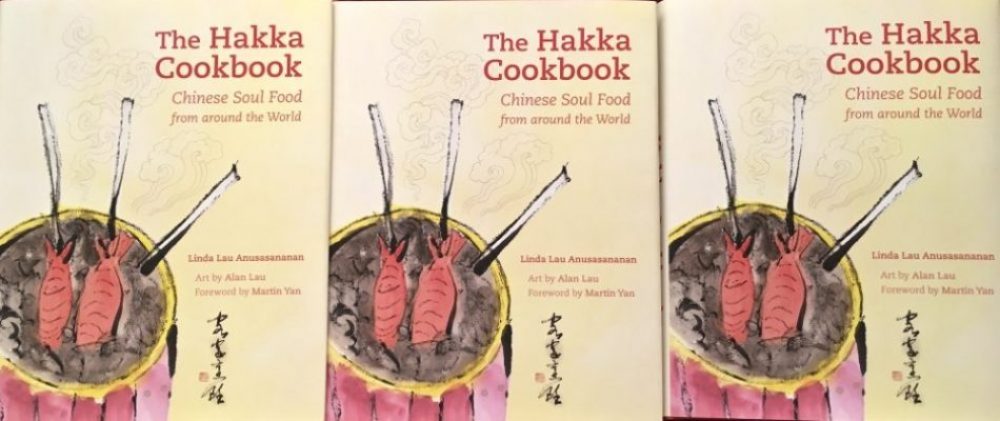
Linda Lau Anusasananan is the author of The Hakka Cookbook: Chinese Soul Food Around the World. After more than three decades writing about food for Sunset Magazine, she traced the history and food trail of her own people, the Hakka, Chinese nomadic pioneers who settled throughout the world. Her cookbook shares her journey with stories and recipes from Hakka from California to Peru.

Finding a book publisher

I first started thinking about The Hakka Cookbook in 2004.  I had contributed to many Sunset cookbooks but had never written one on my own. Although Sunset Magazine had sponsored my first trip to China which resulted in a story “From China’s Kitchen’s to Ours,” writing for the magazine of Western Living, limited some of my authentic ethnic pursuits. I wanted to write outside of the Sunset boundaries.

I knew Hakka cooking was not exactly mainstream.  Even many Chinese knew little about the cuisine. The subject of my cookbook, Hakka recipes, had good and bad arguments. It was a totally unique subject (a good thing) but lacked mainstream appeal (a bad attribute for publishers who want to sell a lot of books). Although I had experience writing recipes, I was not a celebrity. I learned a big name—in the sense people recognize you— scores high with publishers (a long name like mine doesn’t count). That means it’s easier to sell a lot of books. A well-known chef, a food network star, even an actor has a better chance selling a cookbook proposal than a professional recipe and food writer.

The first step was writing a book proposal. I needed to include the focus of the book, sample recipes and text, art samples, explain who would buy the book, and why I was qualified to write the book. I heard authors had better chances of selling a proposal with a book agent. I gathered recommendations from my author friends and sent my proposal to about half a dozen agents. Finally after six months, I received an offer from a New York agent who agreed to represent my book.

After about a year, she was still unable to sell my book. I felt she had exhausted her contacts (at least ones that would pay well enough for her to earn a decent commission) and decided to sell the book myself.  After a few inquiries to smaller publishing houses, I received two offers. The advances were minor, but they were willing to publish the manuscript. I signed with the publisher that agreed to follow my concept of the book and include my brother’s art. Within a few months after I signed the contract, the economy sank. Publishing was changing. Fewer books were being printed. E-books and self-publishing were gaining a foothold. In 2009, after I had submitted my first half of the manuscript, I started to get nervous. They postponed the publishing date.  My contacts on the staff were leaving. People throughout the country were losing their jobs. Finally I heard back from the publisher. Due to the downturn in the economy, they felt they could no longer afford to publish the book. They canceled my contract.

I was back where I started.  I decided to go back to potential publishers who I felt were a good fit but could not publish me when I asked years ago. Luckily, University of California Press accepted my proposal  in 2010. This is my first experience with a university press so I’m not sure if the process is the same for all. You need patience working with a university press. At almost every step, my proposal and manuscript were sent out to scholars and professionals to review. Based on their recommendations, they would decide whether to publish or not. The reviews were helpful, especially with my research. Scholars contributed good references and facts. Best of all, they recommended that my book be published. I might not make any money at all unless I sell a lot of books, but at least my years of research and recipe testing would be published. With the publisher’s slim budget, my brother’s art would no longer be in glorious color, but a least it would appear. I felt the book had finally found a good home.

Hakka tastes in London

Just back from London. Ate at Four Seasons, a Chinese restaurant famous for its roast duck. My sister-in-law, a flight attendant, says all the Thai flight crew order duck over rice.  They present the duck Thai-style, cut-up over rice with a dark salty-sweet sauce, accompanied with a tray of Thai condiments. My Thai husband loved it.

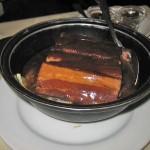
I was drawn to the Hakka dishes on the menu. Although it wasn’t a Hakka restaurant, Hakka classics such as steamed pork belly with preserved mustard greens (kiu nyiuk moi choi) and salt-baked chicken (yam guk gai) appeared on the menu. They weren’t labeled Hakka but were popular with the Chinese customers.

Pork belly steamed on a bed of preserved mustard greens in a dark savory sauce

Although I didn’t get to London for my cookbook, it makes sense there would be a Hakka presence in Great Britain. Many Hakka immigrated to British colonies such as India, the West Indies, Hong Kong, and Malaysia. Some may have later migrated to the United Kingdom. The Chinatown looks like most throughout the world. A few compact blocks are packed with restaurants selling dim sum, roast ducks, and fresh seafood. There are small noodle shops and Chinese bakeries. Although I didn’t meet any Hakka there, I could taste the Hakka presence in the food.

Toronto Hakka Conference

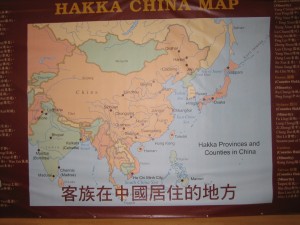
Map of Hakka provinces in China as seen at Toronto Conference 2008

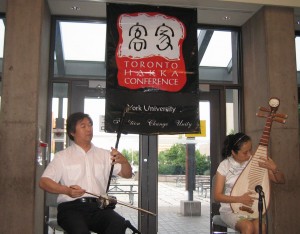
If you want to learn more about the Hakka culture and what it means to be Hakka, register for the Toronto Hakka Conference.  This conference takes place once every four years. I went to the 2008 conference and met more Hakkas than I had ever seen before.  I had grown up in a small town where we were the only Chinese. I always felt we were different. At the conference, Hakka people surrounded me who shared the same history.  Here I had found my family, people like me. I was no longer an outsider.

From June 29 to July 1, 2012 at York University there will be sessions on Hakka from all parts of the world, history, genealogy, architecture, and food.  I will be speaking in a session on Hakka Cuisine, Ancient and Modern with Prof. Shiu Loon Kong.  Register soon.

Who are the Hakka?

Who are the Hakka? Simply put, you might call them China’s nomads.

There are many theories about their origin. The story that most Hakka embrace is that around the fourth century, invaders forced the ancestors of the Hakka from their home in north-central China, once the cradle of the Han, or Chinese civilization. They fled south in a series of migrations. During a period of relative isolation from the tenth to almost the fourteenth century in southwestern Fujian province, they solidified their culture and language.  By the time they reached the southern provinces, land was already settled so when the Hakka moved elsewhere they were considered the unwanted newcomers. The best, most fertile pieces of land were already taken. They were left with the scraps. They had no connected homeland and lived as dispersed minorities throughout Southern China.

The Hakka made the best of what they had and soon gained a reputation of being hard workers, pioneers who could survive almost anywhere. Other Chinese often looked down on the Hakka because they were migrants, unwanted newcomers, poor, independent, and clannish. In the twentieth century, the labeled them Hakka (Kejia in Mandarin) meaning guest people or family. Some Chinese called the women “big feet” because the Hakka did not follow the prevalent practice of foot-binding. It simply wasn’t practical. Women could not work in the fields with bound feet. Hakka women were feminists –independent, stubborn, strong, and hard-working.

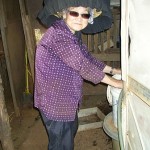
Hakka women often wear a straw hat with a black veil attached around the edge of the brim.

By the end of the nineteenth century, the Hakka proudly claimed their identity. Contact and conflict with other ethnic groups, especially during the Taiping Revolution (1851 to 1864) and the West River Hakka-Cantonese wars, fostered an ethnic group with a shared identity.  After the wars, many Hakka left China to find a new life and escape the turbulence in their homeland. They emigrated to India, Southeast Asia, Taiwan, South America, Mauritius, North America, Tahiti, the West Indies, and many other destinations. Eventually they dispersed all over the world. Like dandelions, where ever they landed, they dug in, adapted, and flourished in their new homes.

The Hakka Cookbook is done!

I’ve finished the page proofs, the editor is doing her final read, and soon the book will be on its way to the printers. I can’t believe it.  It has been a very long journey.

On this site, I’ll take you behind the scenes on how an idea grew into a book. Follow me along the way.

The Hakka Cookbook is coming

This site is still under construction. Bookmark this page and come back this spring to learn about The Hakka Cookbook: Chinese Soul Food from Around the World.  The book published by the University of California Press will be released in the Fall of 2012.  This blog will explore the story behind the book and the journey of the author, Linda Lau Anusasananan, as she researched the book from California to China and around the world.